

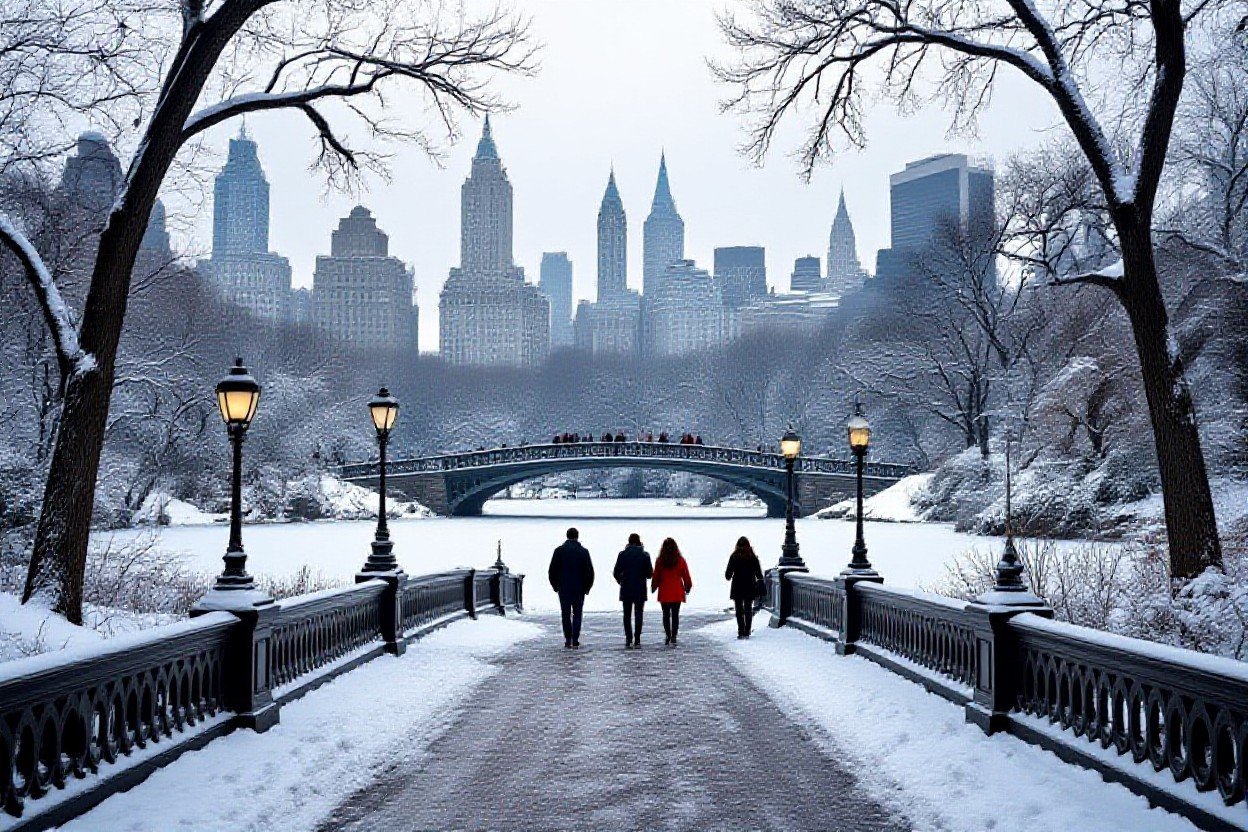
Over the years I’ve expected Central Park in December to be one long postcard – snowy paths, ice skaters and a crush of tourists, but what’s wild is how many quiet, off-beat spots you can still find if you wander, really wander; I tell you where I go, what I pack, when I time my visits and how to trade the holiday frenzy for a calm, frosty walk that actually feels restorative. Want to give it a shot?
What’s it like being a First Timer in Central Park?
Compared to stepping into a quiet gallery, a first-timer in Central Park feels like being dropped into an 843-acre set where every turn has its own vibe. I wandered from Columbus Circle to Bethesda Terrace, hit Bow Bridge and the Mall, and clocked a few miles without even trying – the place swallows distance. You’ll spot Wollman Rink in December, street performers by the Naumburg Bandshell, and pockets of silence near the Reservoir; it’s huge, but oddly easy to navigate once you pick a landmark and go.
Must-see spots that’ll blow your mind
Like a greatest-hits mixtape, the park’s highlights hit fast: Bethesda Terrace’s carved stone and fountain, Bow Bridge’s swooping cast-iron span, Belvedere Castle’s tiny tower with a skyline peek, Strawberry Fields’ Imagine mosaic, and Sheep Meadow for people-watching. I make a loop that hits the Mall and the Reservoir edge; each spot’s a different mood in minutes. If you only have an hour, aim for Bethesda, Bow Bridge, and a quick stroll past the Loeb Boathouse.
Getting the best views for those Instagram shots
Compared to generic skyline snaps, Central Park gives layered views where water, trees and buildings play together – and timing matters. I chase sunrise at Bow Bridge for reflection shots, hit the Reservoir at golden hour for a wide skyline sweep, and use Belvedere Castle for elevated city frames. Want fewer people? Arrive 30 minutes before prime light. And yeah, storms make dramatic skies – those clouds can turn a ho-hum photo into something wild.
Compared to guessing settings, I dial in specifics so your shots don’t suck: ISO 100-200 in bright light, bump to 400-800 at dusk, and try 1/125-1/250 handheld for general scenes. Use a tripod for long exposures around the lake – you’ll smooth reflections.
That little prep makes a huge difference.
Don’t know how to dress for a Winter Storm? Here’s my advice!
Many people assume a winter storm just means thicker layers, not a different strategy – but storms bring wind, wet snow, and plunging wind-chill that change everything. I check the forecast: if temps dip under 20°F (-7°C) or winds hit 15-25 mph I swap to a waterproof shell, a mid-layer like 700-fill down or synthetic equivalent, and a merino base layer; pack hand warmers and a battery pack for long walks. Dress in layers.
Layers, layers, layers!
Some folks think one big sweater does the job, nope. I start with a moisture-wicking base (merino or polyester), add a fleece or 200-weight insulating layer, then a waterproof-breathable shell on top – that combo handles walking, sitting, and sudden wind. I toss a thin puffy in my bag for when temps drop more. Want to sweat less and stay warmer? Vent early, peel a layer, stash it – easy.
Don’t forget the accessories!
People often assume gloves and hats are optional if your coat is solid, and they end up with numb fingers and ears. I bring insulated gloves plus thin liners, a hat that covers the ears, and a neck gaiter or balaclava for wind. Waterproof mittens beat gloves for long exposure. Keep your extremities dry and insulated.
You might believe all gloves are the same – they’re not. I use touchscreen-compatible liners for quick phone snaps, then heavier Gore-Tex or leather shells over them when it’s wet; mittens trap heat better, but gloves give dexterity for a camera or coffee. Hand warmers lasting 6-10 hours are great for long park days, and calf-high, insulated, waterproof boots with good traction keep toes from freezing on slushy paths.
Is it really worth it to take pictures in the winter?
With the recent surge in winter street and park photography on Instagram and travel feeds, I’ve been getting asked more – is snow worth the effort? I say yes, because winter gives contrast and mood you don’t get in July; low sun, quiet paths, and fewer people mean cleaner frames. I shoot at golden hour or just after fresh snow, boost exposure a touch, and you end up with shots that feel cinematic – worth the cold, right?
How to capture the magic of snow
These days I aim for the first hour after sunrise or the last light, but you can also make late-afternoon blue tones sing. I usually set exposure +1 to +2/3 EV so snow reads white, use spot or evaluative metering depending on the scene, and switch white balance to 6000K if it looks too blue. Faster shutter like 1/250 freezes flakes, slower like 1/15 makes trails – try both, and don’t be shy with a tripod for long exposures.
Tips for snapping the perfect shot
I carry two spare batteries because cold kills them fast, and I keep one tucked inside my jacket. I shoot RAW, bracket exposures when highlights are dicey, and use a lens hood to keep falling snow off the glass. Compose with contrasts – dark trees against white fields, or a red scarf against grey sky – and check your histogram, not just the LCD preview, to avoid blown highlights.
- Keep spare batteries warm in an inside pocket and swap often.
- Shoot RAW and bracket by 1/3 to 1 stop increments when light changes fast.
- Use a polarizer sparingly to reduce glare on ice, or to deepen blue skies.
- Knowing how to read your histogram and pull back exposure will save blown-out snow highlights.
I’ll add one more practical thing: I autofocus, then switch to manual when flakes confuse the AF system, and I set low ISO – 100 to 400 – whenever possible to keep grain down. It helps to pre-visualize the shot so you can adjust quickly, and I often bracket three frames when I want flexibility.
Always check the histogram.
That little graph tells you more than the tiny preview ever will.
- Backlight falling snow for sparkle, expose carefully to avoid silhouettes.
- Carry a microfibre cloth to wipe the lens between frames, snow melts fast and leaves spots.
- Use a 24-70mm for versatility, or a 50mm for tighter portraits with creamy backgrounds.
- Knowing how you’ll process RAW files – lift shadows, protect highlights – changes how you shoot in the field.
Electric Bikes – Are they the best way to explore?
I explain why this matters to you: Electric bikes let you cover Central Park’s 843 acres and the 6.1-mile loop without sweating the whole time, so you see way more on a short visit. I once zipped 10 miles in under 40 minutes on a pedal-assist that topped 18 mph; most batteries run 20-40 miles so one charge usually lasts a day of stops. Rentals commonly start around $30/hour, and I find an e-bike perfect for a half-day spin.
Riding ’round the park like a local
I want you to feel like a local, so I stick to the 6.1-mile outer loop and the 1.58-mile Reservoir track when I want pace or scenery. I’ll roll West Drive for faster stretches and shift to East Drive to slow down and soak the views; you can hit the Mall, Bethesda Terrace and Bow Bridge in one relaxed lap. Want a quick photo? Park, lock, snap – back on the bike in minutes.
Must-visit spots used in movies
You’ll spot film-famous locations everywhere: Gapstow Bridge (think Home Alone 2), Bethesda Terrace which turns up in dozens of movies and shows, and Bow Bridge that’s basically the poster child for romantic movie scenes like Autumn in New York. I stop at these every visit because they photograph insanely well and you often catch a shot that looks exactly like the scene you know.
I usually start at Gapstow near 59th for skyline shots, then cruise north to Bethesda Terrace around 72nd to catch its arcade and fountain, and finish at Bow Bridge by 74th for sunset reflections; they’re all within about a mile so you can hit them in 20-30 minutes on an e-bike. I’ll tell you, prime light is about 45 minutes before sunset and weekday mornings give you quieter frames – fewer tour groups, more golden-hour space for your shot.
Why I think winter in Central Park is truly special
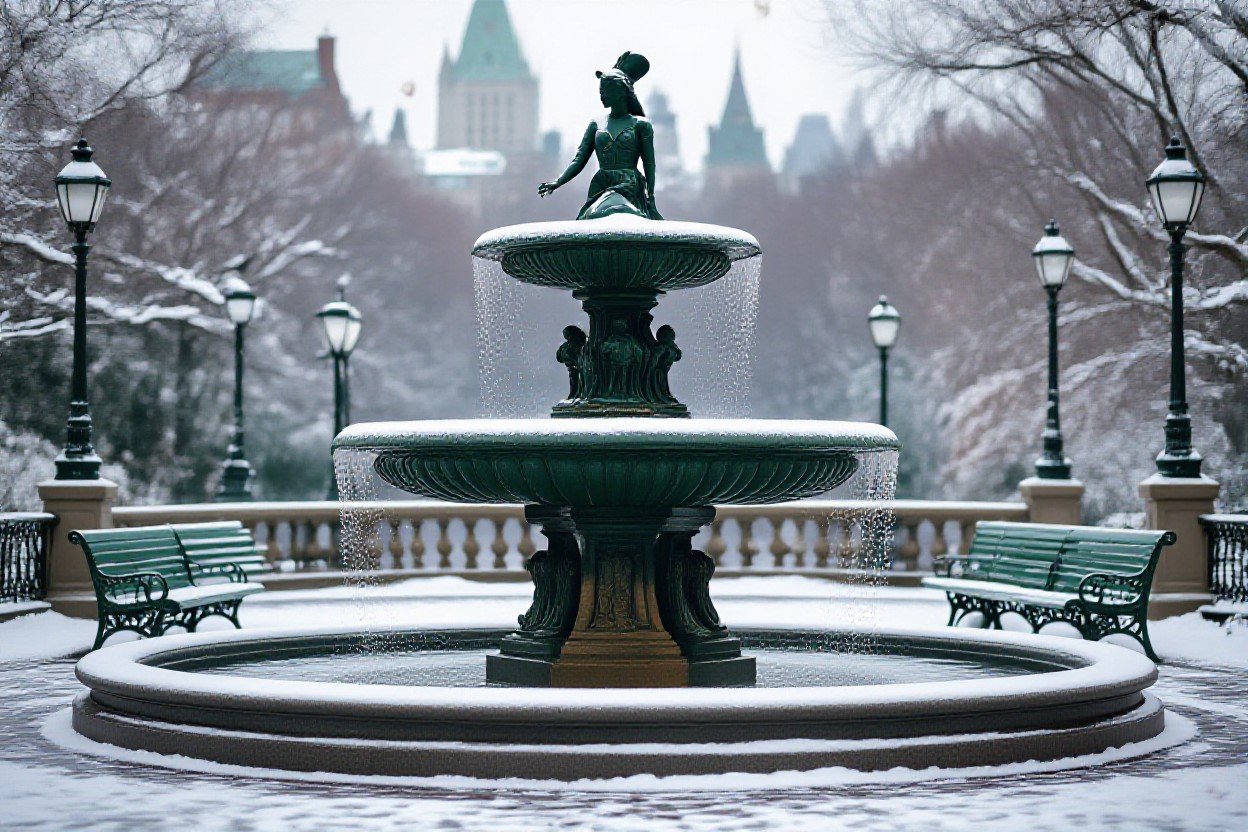
Crossing Bow Bridge the morning after a heavy December snow, water black against white ice and the skyline peeking through bare elms, I feel the city slow down; Central Park’s 843 acres shrink into intimate rooms where you can actually hear your breath. With around 42 million annual visitors thinning in winter, I get stretches of the Mall, the Ramble and the Great Lawn nearly to myself – and that’s when the park’s scale and detail hit me hardest.
The serenity of a snowy landscape
After an overnight dusting I walk the 106-acre Jacqueline Kennedy Onassis Reservoir and everything calms – footsteps crunch, seagulls cry, and the usual hubbub is muffled into small sounds. I watch the pale light hit Belvedere Castle and the skyline reflect on scraped ice; you notice architectural details and sculptures you never noticed in summer. It feels private, like a museum with moving exhibits – and that quiet lets you actually look.
Fun activities to enjoy in the cold
Lacing up at Wollman Rink or heading north to Lasker, you can skate, while kids and grown-ups drag saucers down Pilgrim Hill and Cedar Hill – classic moves, honestly. I often bring a camera; winter light and bare branches frame perfect shots. You can also snowshoe along quieter paths, spot wintering birds in the Ramble, or just picnic with a thermos of something hot and a blanket – simple stuff, big payoff.
I usually aim for weekday mornings when rinks and paths are less crowded, and I rent skates on-site if I didn’t bring mine. Bring layers, wool socks, hand warmers and a plastic sled if you plan to hit the hills; stores near Columbus Circle and the Upper West Side stock cheap saucers. Stay off frozen lakes – the park posts closures – and if you want tips on exact sledding spots or shuttle routes, I can map a short loop that fits your energy level.
Real talk – What about the crowds?
Central Park draws roughly 42 million visitors a year, and December weekends can feel especially packed. I watch the biggest bottlenecks form around Columbus Circle, the Mall, and Wollman Rink between noon and 4pm; if you want fewer bodies go before 9am or after 6pm, or aim for weekdays. I’ll often detour north or east when routes clog, and you can too – small side paths and transverse streets make a huge difference.
Navigating the park during the holidays
On busy December weekends areas like Bethesda Terrace and Wollman Rink can see thousands of visitors in a single afternoon. I use the 72nd Street Transverse and less popular entrances – 79th, 86th, 96th – to skirt crowds, and you should check real-time transit and path closures on the Parks app if you’re tight on time. And yes, a slightly longer walk often saves you from half an hour stuck behind a selfie line.
Finding your own peaceful spot
Central Park is 843 acres, so I can usually get away from the crush just by walking a few blocks north or into the east side gardens. I head to Conservatory Garden, the North Woods, or the Ravine when I want quiet; you’ll find benches, small ponds and almost no lines, even on holiday weekends. Want solitude? Give yourself 20 extra minutes and push past the usual highlights – it pays off.
I often enter at 106th and Fifth for Conservatory Garden, it’s a two-minute oasis from the craziness down south; for the North Woods I’ll jump off at 110th and Malcolm X Blvd and follow the quieter trails north. The Ramble around 73rd-79th is great if you like woodland paths, and Harlem Meer at 110th has wide views and fewer people.
Find a small bench off the main path – that’s the magic.
Bring a thermos, wear layers, and if you want company I’ll point out the best side paths next time.
Summing up
As a reminder, many assume Central Park in December is just gray, freezing and pointless, but that’s not true – it has its own quiet charm and if you time it right you can find snowy lanes and twinkling lights. I stroll the paths, grab hot coffee, and watch skaters while you dodge the crowds – it’s lively yet peaceful. Want a picture-perfect walk?
Go early. This city park changes mood fast, and you’ll be surprised how much warmth it can give.
