

Most visitors seek pizza and bagels, but I map a broader culinary route so you can uncover both iconic eats and hidden neighborhood favorites; I share where to find classic slices, deli masterpieces, immigrant kitchens, and seasonal market bites, plus tips on timing, ordering, and tasting so your New York food journey maximizes flavor, authenticity, and local insight.
Iconic NYC Dishes
I’ve tracked the city’s signature plates from thin, foldable pizza to smoked salmon on a boiled bagel. You’ll encounter decades-old recipes, immigrant histories, and neighborhoods that stake culinary claims – think Di Fara’s hand-tossed pies, Russ & Daughters’ century-old appetizing, and S’MAC’s mac variations – all staples that define New York eating.
New York-style Pizza
I treat a New York slice as geometry: 12-18-inch pies, paper plates, and a fold down the middle. You’ll find a blistered, thin crust, bright San Marzano-style tomato sauce and low-moisture mozzarella from spots like Joe’s, Patsy’s, and Grimaldi’s. Order a plain slice first; it reveals a shop’s dough, oven and salt balance.
Bagels and Lox
I judge bagel quality by the boil and bake: shiny, chewy exterior, dense interior, and room for silky lox. You’ll see hand-rolled bagels piled beside tubs of brined salmon at places like Russ & Daughters and Ess-a-Bagel. Try an everything with scallion cream cheese, red onion and capers to test the contrast.
Beyond toppings, I pay attention to provenance: lox is cured in salt and has a clean, silky texture, whereas smoked salmon is cold-smoked and tastes smokier; gravlax uses dill and sugar for Nordic flavor. I recommend ordering your bagel toasted rather than crisp so the interior holds spreads, and ask for thin-sliced lox to fold neatly on each bite.
Cheesy Broadway Delights
I follow where cheese amps the city’s theater-district appetite: gooey grilled cheeses, decadent mac & cheese, and slice shops layering extra mozzarella for late-night crowds. Spots like S’MAC, Murray’s Cheese bars, and Artichoke Basille’s serve indulgent, theater-ready portions. You’ll often see 3-6 cheese blends, truffle or bacon add-ons, and shareable pans perfect for a post-show group.
On a practical note, I pick dishes that travel well if you’re seeing a show: individual cast-iron mac minis, melts with fontina or sharp cheddar that hold up under hot lights, and an Artichoke slice whose creamy cheese anchors heavy toppings. For faster service, order ahead – many places time pickup to curtain calls so you don’t miss the first act.
Famous Food Markets
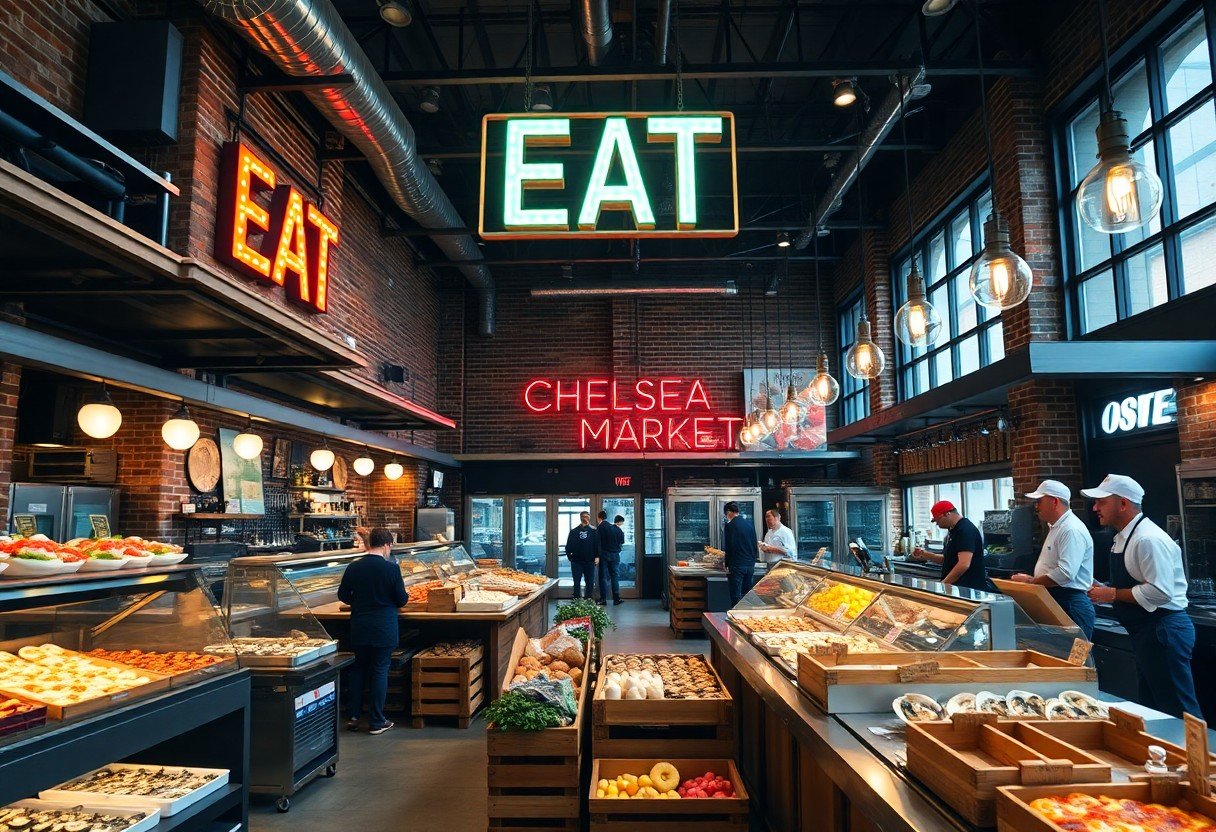
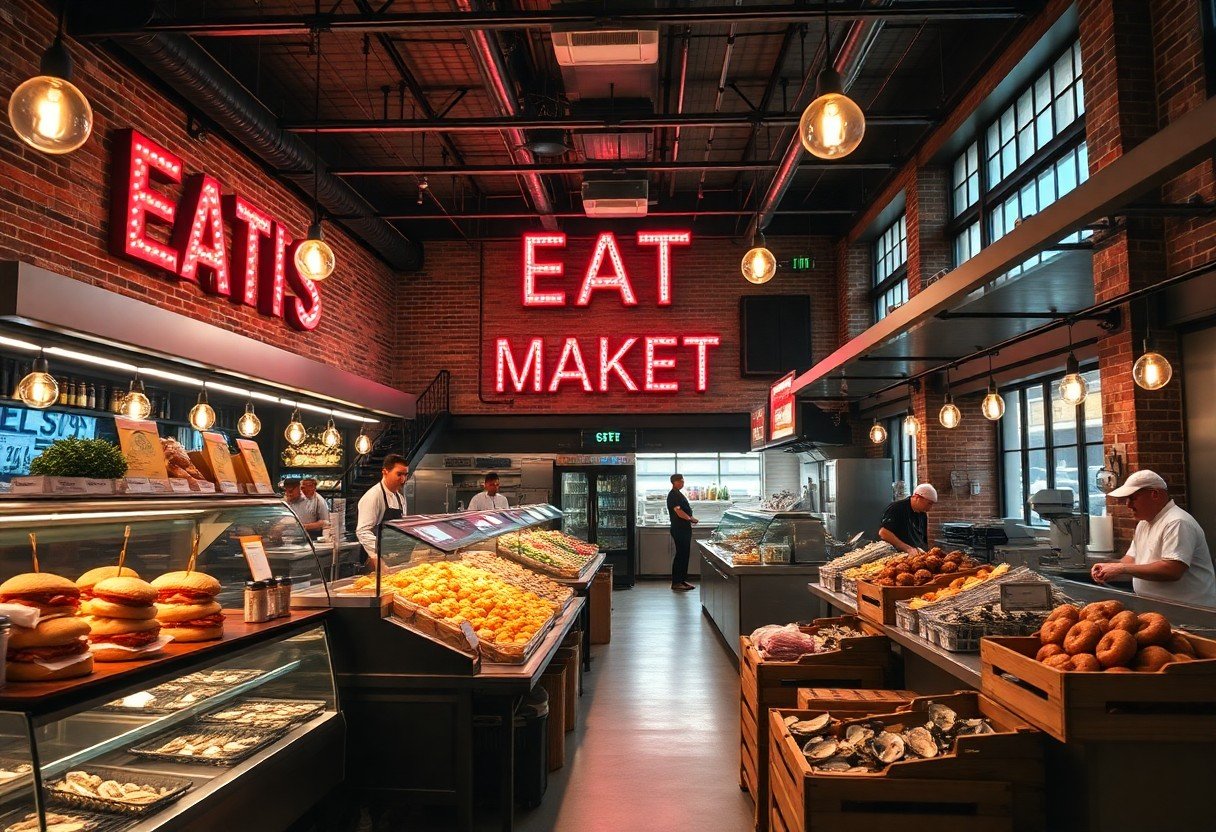
I split my market time between indoor halls and open-air rows, and I find Chelsea Market and Smorgasburg give wildly different bites within a few subway stops. Chelsea’s permanent stalls offer reliable staples and sit-down options, while Smorgasburg brings rotating vendors and festival energy with 100+ stalls on weekend seasons, so I plan my visits by the kind of meal I want.
Chelsea Market
I head to Chelsea Market at 75 9th Avenue for dependable quality: the former Nabisco factory now houses roughly 30-40 vendors, including The Lobster Place, Los Tacos No.1 and Doughnuttery. Inside you’ll find seafood counters, artisanal bakeries and specialty shops; I usually grab an oyster raw bar bite and a taco, then wander the corridors lined with grocery purveyors and designer food shops.
Smorgasburg
I make Smorgasburg a weekend ritual in season (April-October), hitting Williamsburg’s East River State Park on Saturdays or Breeze Hill in Prospect Park on Sundays. Founded by the Brooklyn Flea team in 2011, it showcases over 100 rotating vendors; I try Ramen Burger’s lineage dishes and scout new vendors that often scale up to brick-and-mortar spots after success here.
I plan Smorgasburg runs around timing and lines: arriving at opening or late afternoon shortens waits, and I budget for multiple small plates to taste more vendors. Many stalls accept cards but I carry some cash; water and napkins are imperative. With thousands of weekend visitors, it’s one of NYC’s largest outdoor food markets, so I carve out a route-savory first, sweets last-to maximize what I sample.
Essential Street Foods
I still judge a neighborhood by its carts: long lines usually mean better flavor. You’ll find everything from century-old stands to modern trucks across Midtown, the Village, and Coney Island; I scan for Sabrett umbrellas, clear ingredient displays, and prices in the $2-$12 range to decide where to stop. These stalls give you quick, authentic bites I recommend for a true New York eating rhythm.
Hot Dogs
I go for a classic Nathan’s Famous dog (Coney Island, est. 1916) or a Sabrett cart under blue-and-yellow umbrellas when I want fast, salty satisfaction. Expect $3-$6 for a dog with mustard, sauerkraut, or onions; I often order a chili dog from Gray’s Papaya or a Sabrett with onions and spicy brown mustard when I’m sightseeing near Times Square.
Pretzels
I love a soft, salty pretzel from a subway-vendor cart-usually $2-$4-especially near Central Park, Columbus Circle, or Grand Central. You can pair it with yellow mustard or cream cheese; when I need a handheld snack between museum stops, a warm pretzel is my go-to for chewy, salty comfort on the move.
Historically tied to 19th-century German immigrants, New York’s soft pretzels are often dunked in an alkaline bath (lye or baking soda) before baking to give that brown crust and distinctive chew. I watch for variations-everything, sesame, cinnamon-sugar, cheese-stuffed, and pretzel dogs at ballparks-and favor vendors who fold and bake on-site for the freshest texture.
Halal Carts
I head to the Halal Guys’ original spot (53rd & 6th, founded 1990) or a well-reviewed cart for a chicken-and-rice platter with white sauce and hot sauce; typical prices run $7-$12. You’ll see long lines after bars and late nights-order a combo (chicken + gyro) if you’re sharing, and expect generous portions that’ll fuel you through a Broadway matinee or late museum night.
When I order, I specify chicken, gyro (lamb/beef), or a combo, then ask for its signature white sauce and the red hot sauce on the side if I want spice control. I also check for clear halal labeling and visible cooking areas; carts that display dates and ingredient lists tend to be the ones I trust for consistent flavor and portion size.
Unique Dining Experiences
I chase meals that feel like events: chef’s-counter tastings of 8-12 courses (often $95-250), immersive pop-ups that pair performance with prix-fixe menus, and supper clubs where guest chefs rotate monthly. I’ve seen reservation-only counters sell out weeks ahead and warehouse pop-ups host 100-200 guests in a single night, so I target weekday seatings and split-course options to sample more. You’ll find these across neighborhoods from the Lower East Side to Bushwick, each offering a distinct balance of theater, technique, and price.
Rooftop Restaurants
I prioritize rooftop views for both skyline panoramas and sunset timing: 230 Fifth’s heated igloos frame the Empire State Building, Westlight on the 22nd floor gives sweeping Brooklyn-Manhattan vistas, and Le Bain mixes DJs with a seasonal plunge pool. I expect cocktail prices near $16-24 and dinners often totaling $75-120 per person with drinks. You should reserve 2-3 weeks ahead for weekend sunset slots and ask about weather policies and heater availability in advance.
Themed Eateries
I seek out themed spots for the full sensory package: Ellen’s Stardust Diner pairs Broadway-bound servers with jukebox classics, the Jekyll & Hyde Club stages animatronic theatrics alongside theatrical menu puns, and Ninja New York delivers darkened booths and choreographed service. I find these venues best for groups and special nights; menus range from $10-35 per entrée, and shows often run on predictable schedules, so time your visit to catch peak performances without long waits.
When I plan themed dinners I check seating formats (booths vs. open dining), performance times, and any cover charges; many places require reservations 1-3 weeks out for weekend evenings. I also read recent reviews for consistency-some themed restaurants prioritize spectacle over food quality-so I balance expectations by ordering signature dishes and splitting plates, which lets you enjoy the atmosphere while judging the cuisine fairly.
Dessert Haven
I guide you through the city’s sweetest stops-24-hour bakeries, Michelin-attended patisseries, and neighborhood ice-cream carts-so you can slot dessert after any meal. I flag late-night cannoli in Arthur Avenue, signature pie slices downtown, and seasonal gelato trucks; I also note when bakeries rotate flavors and which shops hold weekly batch releases, helping you time visits for standout pistachio, black cherry, or hazelnut specials.
Classic New York Cheesecake
I hunt for the dense, tangy cheesecake that defines the city: a 9-inch cake yielding 8-12 slices with cream-cheese-forward filling on a graham-cracker crust. I judge texture-smooth, slightly rich, baked low (about 300-325°F) to avoid cracks-and then test variations, comparing a plain slice against sour-cream tops or fruit compotes at places like Junior’s and notable Lower East Side shops.
Black and White Cookies
I track down the half-vanilla, half-chocolate cookie New Yorkers obsess over: roughly 3-4 inches across, cake-like, and commonly $2-4 at classic bakeries. I look for a tender, domed crumb and a clean split of glossy vanilla fondant and darker chocolate glaze; I usually pair one with strong coffee and note local twists-lemon, red-velvet, or cocoa-forward versions at specialty spots.
I dig into technique when assessing black-and-whites: I expect a sponge-like base and a fondant-style glaze applied warm so it seals, producing a slightly tacky finish when fresh. I compare how bakeries balance sweetness and texture-vanilla glaze should be smooth and glossy, chocolate a touch more matte-and I sample day-old versus fresh to see how the glaze sets and the crumb softens, which often reveals the baker’s real craftsmanship.
Local Favorites
In Williamsburg, Astoria, Flushing and Harlem I trace the routes where locals eat: 24-hour diners, Balkan bakeries, Nepali mom-and-pop kitchens. I send you to the 7-train hop to Flushing-Main St for Cantonese dim sum and to Astoria’s 2nd Ave for Greek tavernas where a shared sampler feeds four for under $50. Expect long waits on weekends and plan your weekend accordingly.
Neighborhood Gems
Tucked on side streets I favor a 50-seat East Village trattoria serving hand-cut pappardelle, a 40-year-old West Village bodega flipping breakfast sandwiches since 1982, and a Chinatown dumpling stall with $1.25 potstickers at weekday lunch. I guide you to these neighborhood gems for authenticity, proven by lines and word-of-mouth, and dishes that will fill your itinerary better than any tourist list.
Hidden Foodie Spots
I’ve found 12-seat chef’s counters behind nondescript doors where omakase runs about $95, basement supper clubs seating 30 with rotating chefs on Wednesday nights, and weekday-only markets in Red Hook selling $6 lobster rolls. Seek a single-cart arepa vendor in Jackson Heights offering three fillings for $7. You’ll need reservations, local intel, and flexibility to catch these fleeting experiences.
When I scout these spots I follow neighborhood Instagram accounts, subscribe to two weekly food newsletters, and call the tiny number on a faded sign; that often secures a counter seat weeks in advance and improves your odds. Expect tasting menus between $65-$150, limited hours (often Tue-Thu), and occasional cash-only policies-arriving early or joining a standby list after 9pm can save the day.
Final Words
Summing up, I distilled the Ultimate Foodie’s Guide To New York – Iconic Eats And Local Favorites into a practical roadmap so you can navigate classic institutions and neighborhood gems with confidence; follow my tested tips to prioritize your must-try bites, time visits, and discover authentic spots beyond tourist lines.
