

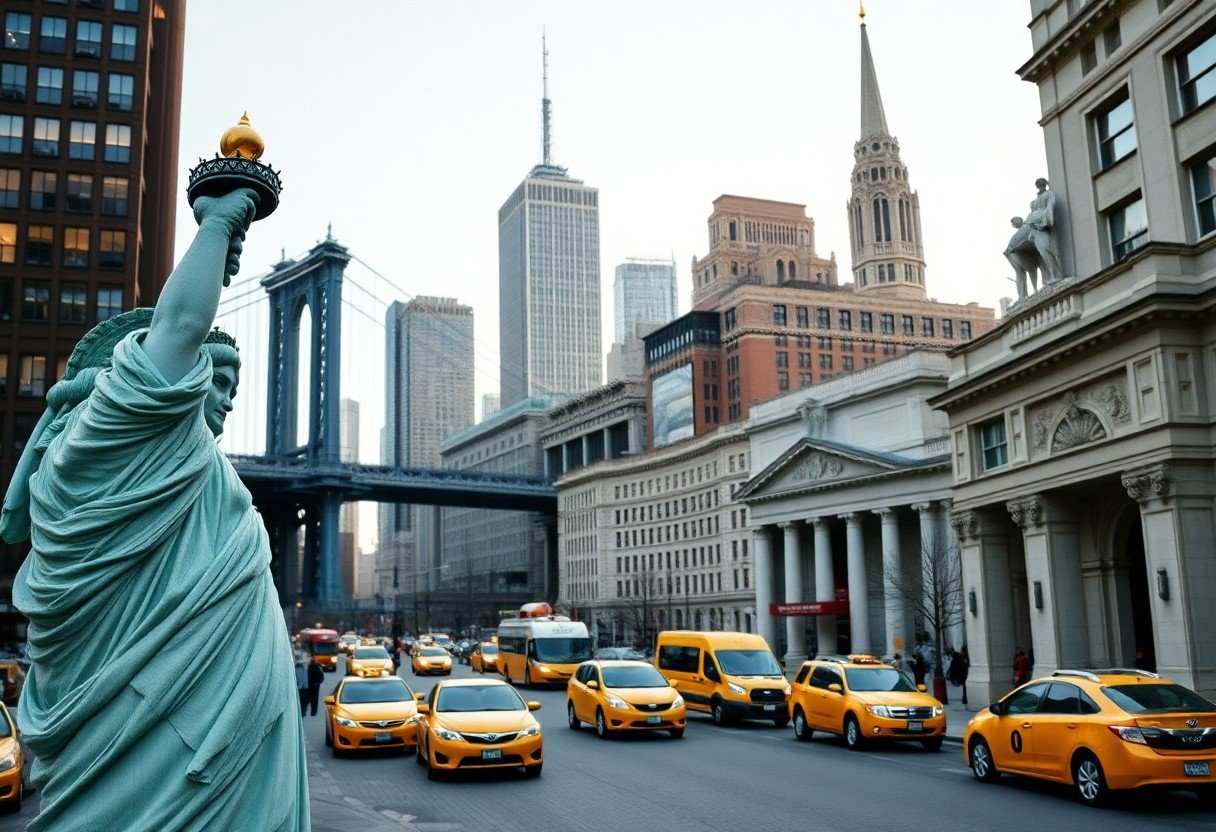
Travel to New York City can be overwhelming, but I present a concise guide to the 10 must-see attractions that will shape your first visit; I explain how to prioritize landmarks, museums, neighborhoods and experiences so you can make the most of your time and craft your ideal itinerary.
Iconic Landmarks
I suggest you set aside a full day to cover the city’s signature monuments: start at the Statue of Liberty and Ellis Island, then work your way uptown to the Empire State Building and Rockefeller Center. I found that booking timed-entry tickets and early ferries saves hours; for example, ferries depart from Battery Park and Liberty State Park, and timed slots for observatories often sell out around sunset, so plan logistics to maximize your viewing windows.
Statue of Liberty
I always book Liberty Island and Ellis Island tickets in advance; the statue, a gift from France dedicated in 1886, measures 305 feet from ground to torch. You can add pedestal or crown access-crown tickets are limited and require ID-and combine the visit with the Ellis Island Immigration Museum to trace specific family stories. Ferries include a security screening, so arrive early to beat lines and capture skyline views from the water.
Empire State Building
I prefer the 86th-floor open-air deck at dawn or late evening to avoid crowds; the Art Deco skyscraper opened in 1931, rises 1,250 feet to its roof (1,454 feet to the tip) and features both the 86th and enclosed 102nd-floor observatories. You can buy timed-entry or express passes, and I check the building’s LED lighting calendar beforehand to catch special-color nights that enhance my photos.
I’ve found early weekday mornings give the clearest photos with fewer people since the observatories draw about 4 million visitors a year. Tickets often allow same-day return with proof of purchase, and the building’s energy retrofit reduced energy use by nearly 40%, so you’re experiencing a historic landmark that’s been modernized for sustainability.
Cultural Experiences
Metropolitan Museum of Art
Founded in 1870, the Metropolitan Museum of Art houses over two million works spanning 5,000 years and sits on Fifth Avenue at 82nd Street. I make a beeline for the Temple of Dendur, Impressionist galleries and Arms and Armor; you should allow two to three hours, or plan a full day to explore beyond the highlights.
Broadway Shows
There are 41 Broadway theaters clustered in the Theater District; I expect most productions to run eight performances a week and last about 2-3 hours with an intermission. You can score same-day savings at TKTS booths (often up to 50%) or via lotteries and rush tickets, but popular titles sell out fast.
I often target matinees for better availability and lower crowds, while blockbuster shows like The Lion King and Wicked commonly fill weeks in advance. You should use apps like TodayTix, check official lotteries (Hamilton popularized digital lotteries) and book early during spring and December holiday peaks, or hunt for rush deals if your schedule is flexible.
Historical Sites
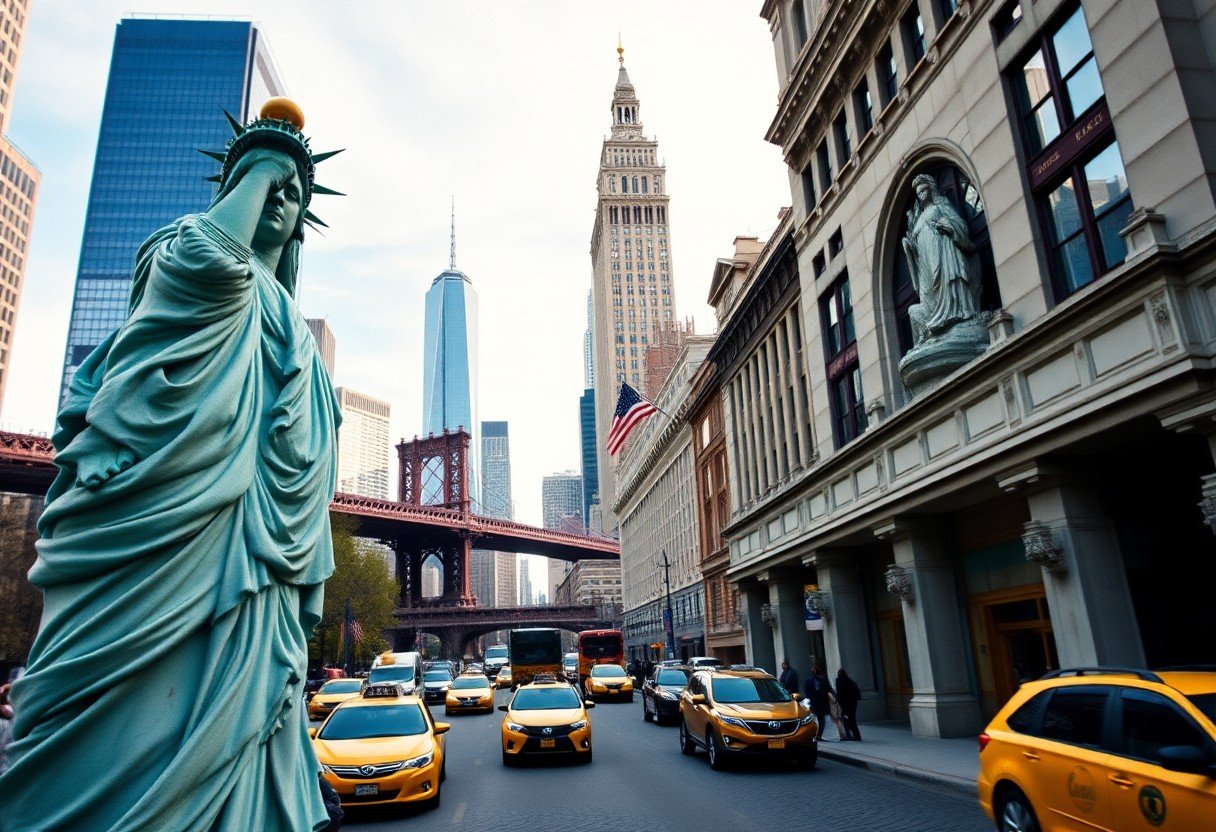
I guide you through landmarks where layered histories meet: Federal Hall on Wall Street, where George Washington took the oath in 1789; the African Burial Ground’s 18th-century memorials; and Lower Manhattan’s museums and monuments that compress centuries into a walkable route. I map practical connections so your itinerary links these sites efficiently, often keeping walking segments under two miles between major stops.
9/11 Memorial and Museum
At the 9/11 Memorial I pause at the twin reflecting pools set in the original towers’ footprints-each nearly an acre with 30-foot waterfalls-and read the 2,983 names inscribed around them. I recommend reserving timed-entry Museum tickets in advance; the exhibitions include artifacts, survivor testimonies and the recovered Last Column. I plan 1.5-2 hours for the Museum and 30-60 minutes at the Memorial to take it in respectfully.
Ellis Island
Ellis Island processed roughly 12 million immigrants between 1892 and 1954, and I always tell you to visit the Registry Room (Great Hall) where arrivals were inspected. I suggest taking the ferry from Battery Park-often sold with Statue of Liberty access-and allowing 2-3 hours to tour exhibits, use the audio guide and consult the passenger lists that bring personal stories to life.
At the Ellis Island National Museum I spend time in the American Family Immigration History Center, where you can search ship manifests to locate ancestors’ names, ages, occupations and ship details. I advise bringing as many family identifiers as you can-birth years, hometowns-to speed searches; many visitors leave with exact arrival dates and ship names that convert family lore into verifiable records.
Parks and Recreation
Parks offer relief from the city’s rhythm; I point you to green spaces that deliver very different experiences. Central Park’s sweeping lawns and formal gardens span 843 acres and host concerts and rowing, while the High Line’s 1.45-mile elevated trail repurposes industrial infrastructure into curated plantings, art, and skyline views that change by season and light.
Central Park
When I take you to Central Park I start at the south end and walk north across 843 acres designed by Frederick Law Olmsted and Calvert Vaux (begun 1858). The Reservoir loop is 1.58 miles for running, the Loeb Boathouse rents rowboats, and I always stop at Bethesda Terrace to watch street performers and chamber musicians on summer weekends.
High Line
I recommend the High Line for a compact, elevated stroll – it’s 1.45 miles long, first opened in 2009, and attracts about 8 million visits annually. Designers James Corner Field Operations and Diller Scofidio + Renfro layered native plantings and rotating public art, so you get architectural views, curated gardens, and seasonal installations in less than two miles of walking.
For more detail, I suggest you start at Gansevoort Street near Chelsea Market for food options, then walk north to the 34th Street Spur and Hudson Yards; access points include 14th, 16th, 23rd, 30th and 34th Streets with elevators at several entries. Early morning or weekday afternoons reduce crowds, and the 10th Avenue Square amphitheater is a great spot to sit and watch traffic below while enjoying site-specific art.
Unique Neighborhoods
Greenwich Village
I wander the Village’s narrow, tree-lined streets, starting at Washington Square Park with its marble arch (completed in 1892) and lively chess scene. I point you to the Stonewall Inn, site of the 1969 uprising that reshaped LGBTQ+ history, then stroll Bleecker and Macdougal for jazz at the Village Vanguard (opened 1935), intimate comedy at Comedy Cellar, and bakeries and indie bookstores tucked between landmark brownstones. You’ll find a mix of cultural institutions and everyday neighborhood life.
Williamsburg
I head across the East River to Williamsburg, where Bedford Avenue runs as the main spine and street art covers warehouse walls. I recommend weekends at Smorgasburg (est. 2011) for 100+ food vendors, then Artists & Fleas for vintage and crafts. Domino Park, opened 2018 on the old Domino Sugar site, offers skyline views and riverside seating. You can easily spend an afternoon sampling food, galleries, and boutique shops.
I usually take the L to Bedford Avenue (the neighborhood’s busiest stop) or the NYC Ferry to North Williamsburg for faster river access. I go to Brooklyn Steel for shows-its roughly 1,800-capacity venue draws major acts-and often hit the Wythe Hotel rooftop for sunset views. I explore side streets off Kent Avenue for microbreweries, record stores, and pop-up markets to see how industrial warehouses became one of Brooklyn’s trendiest hubs.
Culinary Delights
I explore neighborhoods where food defines the experience: thousands of restaurants across more than 100 cuisines, from three-Michelin-starred dining rooms to street carts. I point you to standouts-Katz’s pastrami (since 1888), Ferrara’s cannoli, and Queens falafel carts-and suggest weekday reservations for popular spots plus the nearest subway stops so you waste less time between bites.
Food in Little Italy
I wander Mulberry Street during the Feast of San Gennaro, which draws over a million visitors, to sample espresso and ricotta-stuffed cannoli at Ferrara (est. 1892) and old-school red-sauce plates. Then I cross into nearby Nolita for pizza at Lombardi’s or contemporary Italian tasting menus, ordering dishes family-style so you can compare sauces and house-made pastas.
Bagels and Deli Classics
I bookmark morning stops like Ess-a-Bagel (1976) for hand-rolled bagels and Russ & Daughters (1914) for lox, while Katz’s Delicatessen (since 1888) remains the benchmark for pastrami on rye. Katz’s lines move quickly if you grab a ticket and order the classic with mustard; try a toasted everything bagel, bialy, and whitefish salad to sample deli variety.
I look for bagels boiled briefly before baking-the boil gives the shiny crust and chew-while many NYC bakeries cold-ferment dough for 12-24 hours to deepen flavor. Experienced bakers often praise New York’s water chemistry for texture, so I compare shops by chew and crust. When you order, pair a sesame bagel with scallion schmear and lox, then follow with a pastrami sandwich to see how deli technique shifts between neighborhoods.
To wrap up
Upon reflecting on the 10 must-see attractions in New York City for first-time visitors, I find that these landmarks give you a compact roadmap to the city’s history, culture and skyline; I advise prioritizing a mix of museums, parks, viewpoints and neighborhoods so your time is well spent, pacing your days and booking tickets ahead to avoid long lines and maximize your experience.
