

There’s no shortage of iconic sights and hidden gems in New York, and I lay out a focused 48-hour plan that helps you conquer the highlights without wasting time. I prioritize efficient transport, morning rituals, and a mix of museums, skyline views, neighborhoods, and bites so your itinerary feels achievable and memorable. Follow my route and tips to see more, avoid common delays, and savor the city’s energy in a single weekend.
Planning Your Weekend
I map two neighborhoods per day and factor transit, meals, and a 2-3 hour museum block into the 48 hours. For example: Day 1 – Midtown morning (Top of the Rock, Bryant Park) then Chelsea/High Line; Day 2 – Lower Manhattan (9/11 Memorial, Battery Park) and an evening in DUMBO. I budget 20-45 minutes for subway hops and reserve 90 minutes for lunch and coffee to keep the pace enjoyable.
Choosing Your Arrival Time
I aim to arrive early when possible: landing at 8-9 a.m. gives me nearly a full day, while a Friday evening arrival lets me enjoy dinner and a show. From JFK expect 60-75 minutes to Midtown via AirTrain + subway, LaGuardia usually takes 30-60 minutes by bus+subway, and Newark is about 40-60 minutes to Penn Station. I check hotel check-in (often 3 p.m.) and plan bag-drop options.
Essential Packing Tips
I pack broken-in walking shoes, a compact umbrella, a 10,000-20,000mAh power bank, and a lightweight daypack for maps and snacks. I preload the OMNY app or bring a MetroCard, carry a reusable water bottle, and keep printed copies of reservations and ID in a separate pocket to speed lines and backups.
- Comfortable sneakers – I often log 8-10 miles on a weekend
- Portable charger (10,000-20,000mAh) and an extra USB-C cable
- Compact umbrella and a thin, packable jacket
- Thou keep photocopies of ID and confirmations both on your phone and in a small paper folder
I test shoes beforehand and choose ones with support-I prefer styles rated for frequent walking. You should pack layers: spring mornings can be near 45°F and afternoons 65-70°F, so a breathable mid-layer and a light shell are ideal. I bring a TSA-compliant 3.4 oz toiletries kit and a small printed map in case service drops during subway rides.
- Small first-aid kit and prescription meds in original containers
- Spare earbuds, a phone charging brick, and a compact power strip if you need multiple outlets
- Nonperishable snacks (granola bars) and a collapsible water bottle
- Thou stash hand sanitizer and sunscreen in an outer pocket for quick access
Day 1: Exploring Manhattan
I start Day 1 with a 1-2 hour walk through Central Park-Bethesda Terrace, Bow Bridge, and the Reservoir-then head down Fifth Avenue to Rockefeller Center for Top of the Rock (67th-floor views) or the Empire State Building’s 86th-floor deck; afternoon plans include the High Line and Chelsea Market, and I finish the evening with a Broadway show in Midtown, keeping transit under 30 minutes by using the 1/2/3 or A/C/E lines.
Iconic Landmarks
I prioritize Statue of Liberty access from Battery Park (15-20 minute ferry), One World Observatory on floors 100-102 for skyline context, a 1.1-mile stroll across the Brooklyn Bridge for skyline photos, and Times Square’s theater district-there are 41 Broadway theaters-so I budget time for lines, ticket pick-up, and 20-30 minute photo stops at each site.
Dining Options
I mix quick classics and fine dining: grab a New York pizza slice for $3-6 or a Katz’s-style pastrami sandwich around $20-30, hit Chelsea Market or Eataly for casual variety, and book Michelin-starred spots like Le Bernardin if you want a splurge; I also recommend pre-theater prix-fixe menus in Hell’s Kitchen for efficient, quality meals before a show.
I usually reserve dinner 2-3 weeks ahead via Resy or OpenTable, arrive 15-30 minutes early for brunch or lunch hotspots, and allot 75-90 minutes for a dinner before a 7:30 show; expect to tip 18-25%, use contactless payment widely, and consider food halls (Chelsea Market, Essex Market) when you want variety without long waits.
Day 2: Cultural Immersion
I spend Day 2 venturing into museums, galleries and neighborhoods-start early with a major museum, then wander SoHo or the East Village in the afternoon and catch an evening show or jazz set. I usually allot 3-4 hours for the Met or MoMA, an hour for a Chelsea gallery hop, and leave time to grab street food in Chinatown or a rooftop drink with skyline views.
Museums and Galleries
At the Metropolitan Museum (1000 Fifth Ave) I aim for 2-3 hours to see Egyptian and European highlights; MoMA (11 W 53rd St) offers modern masters and can get busy after 11:00. I make time for the Guggenheim’s spiral (1071 Fifth Ave) and the Whitney in the Meatpacking District, and I spend 20-30 minutes per stop while gallery-hopping through Chelsea’s roughly 200 spaces.
Unique Neighborhoods to Visit
Greenwich Village and SoHo deliver cobblestones, cast-iron facades and cafe culture, while DUMBO gives the iconic Manhattan Bridge photo at Washington Street. I head to Williamsburg for indie shops and nightlife, Bushwick for the mural-packed Bushwick Collective, Harlem for the Apollo’s long-running Amateur Night, and Flushing when I want dense, authentic pan-Asian dining.
If you’re short on time I pair SoHo and the Village on foot-about 90 minutes total for shopping and Washington Square Park. For DUMBO, take the F to York Street or the East River Ferry; the cobblestones near Plymouth and Water Street make great photos. Williamsburg’s Bedford Ave is easiest via the L or ferry, and I budget 2-3 hours there for markets, street art and waterfront beer gardens.
Nightlife and Entertainment
I split evenings between live shows and bar-hopping: Broadway and Lincoln Center deliver world-class theater, Madison Square Garden (≈20,000) and Terminal 5 (≈3,000) host headline concerts, while Village jazz spots like Blue Note and Village Vanguard offer two-set, roughly two-hour performances you can catch after dinner.
Shows and Concerts
I book in advance but scan TKTS for same-day Broadway discounts (up to 50%) and use TodayTix or box offices for lower fees; Broadway musicals generally run 2-3 hours, Beacon Theatre seats 2,894, Hammerstein about 2,200, and intimate venues like Mercury Lounge hold ~250 for a closer, louder experience.
Bars and Lounges
I gravitate toward rooftops for skyline views-230 Fifth and The Press Lounge-or speakeasies like PDT, Attaboy, and Death & Co; expect craft cocktails around $14-20, weekend covers commonly $10-30, and varied vibes from lounge jazz to DJ-driven nights.
I plan logistics: reserve when possible, arrive before 10pm on busy nights, and be prepared for 15-30 minute waits at popular small bars; seasonal features-230 Fifth’s winter igloos, rooftop hours shifting with daylight-shape the evening, and tipping ~20% plus checking dress codes keeps entry smooth.
Transportation Tips
- I wear comfortable shoes and expect to walk: Manhattan averages about 20 north-south blocks per mile, so plan routes by block count.
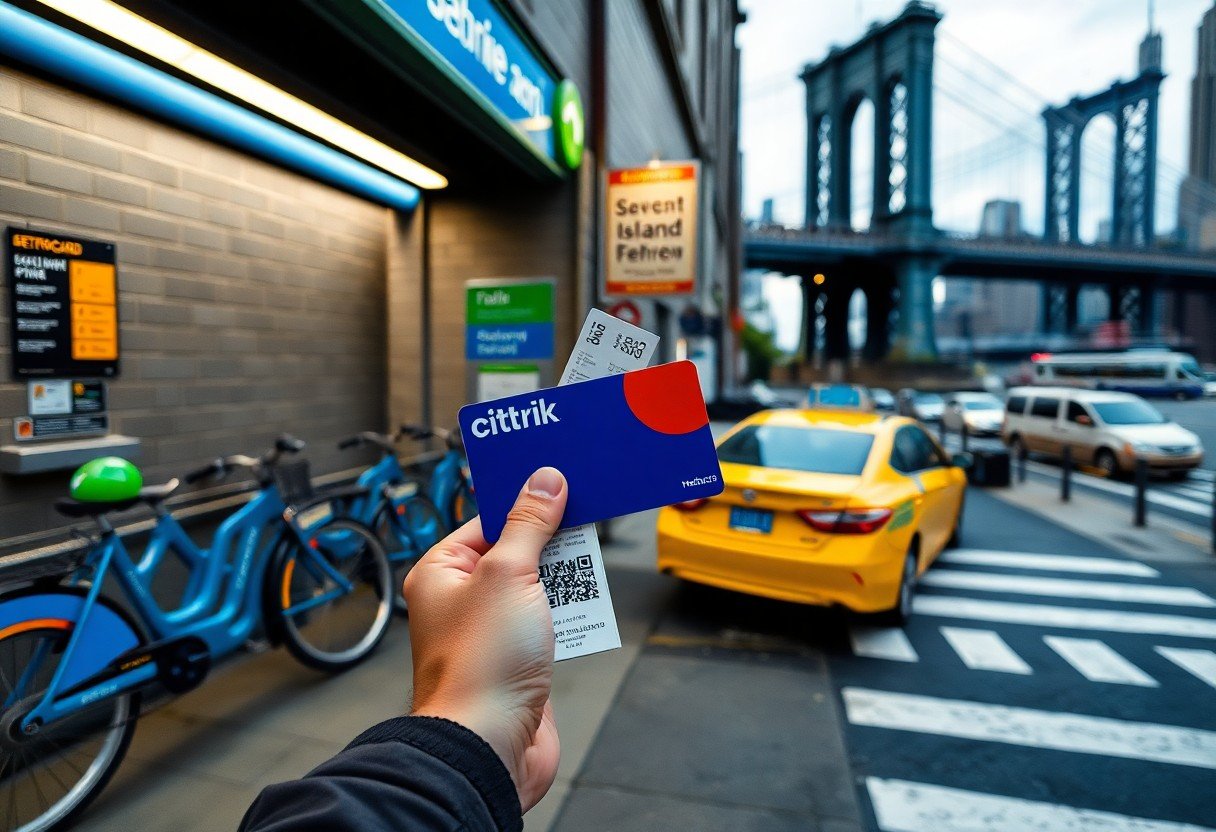
- I use OMNY contactless taps system-wide for speed; the single fare is $2.90 and it saves me from vending-machine lines.
- I check MTA service advisories and Citymapper for weekend work-weekend reroutes on lines like the L or 7 can add 15-30 minutes.
- I take the Staten Island Ferry for a free skyline view and use Citi Bike for short hops (first 30 minutes fit most rides).
Getting Around the City
I mix walking, subway and Citi Bike depending on distance: I’ll walk up to 10-15 blocks for a neighborhood detour, use the subway for longer north-south trips (24/7 service on most lines), and grab a Citi Bike for quick crosstown hops-you’ll shave time and see more; expect about 20 blocks per mile and plan avenues as longer stretches.
Navigating Public Transit
I tap OMNY at turnstiles and on buses-it’s contactless and accepted system-wide with a $2.90 single fare, so you’ll board faster; I also avoid peak windows when possible since trains and platforms get crowded during 7-9:30am and 4-7pm.
I rely on the MTA site and apps like Citymapper and Google Maps to spot planned weekend work and real-time arrivals; I watch for express versus local service (express saves 10-20 minutes on long trips), follow platform signage, and transfer where needed to cut walking-this routine cuts surprises and keeps my day on schedule.
Thou tap OMNY and check mta.info before you head out; I find that planning around weekend service changes and peak hours saves both time and stress.
Local Insider Recommendations
Hidden Gems
I weave in small stops I love: the 1‑acre Elevated Acre for a quiet skyline perch, Mmuseumm in Cortlandt Alley for oddball micro‑exhibits, and Green‑Wood Cemetery (est. 1838, 478 acres) for dramatic sculpture and birding. I also ride the Roosevelt Island Tram-about a 4‑minute crossing-for unique skyline photos and a cheap vantage point. If you have 30-90 minutes spare, I suggest pairing two of these to escape the usual tourist flow without wasting transit time.
Seasonal Events and Activities
I time trips for big draws: Tribeca Film Festival in April, Pride in June, Governors Ball in late May/early June, and the NYC Marathon on the first Sunday in November. I book paid events in advance-festivals often sell out within weeks-and I aim to arrive 1-2 hours early for free events like Shakespeare in the Park to snag good spots. Your transit will be heavier, so plan extra travel time.
For practical details, I use event apps and official sites: book Tribeca passes early, enter Shakespeare in the Park lotteries or join the Delacorte line by mid‑afternoon, and for parades I position myself along Central Park West or Sixth Avenue and arrive 2-3 hours before start. I keep a MetroCard or contactless payment ready, check MTA advisories for service changes, and pack a small chair or blanket for long waits during summer concerts and winter markets.
Summing up
The two-day itinerary I outline condenses New York’s highlights into a manageable weekend: I prioritize a morning museum, midday neighborhoods, an afternoon skyline view, and an evening show or riverside walk so you get breadth without rushing; you can tweak timing for your pace, reserve key tickets in advance, and use the subway to maximize hours – follow this plan and you’ll make the most of 48 hours.
