

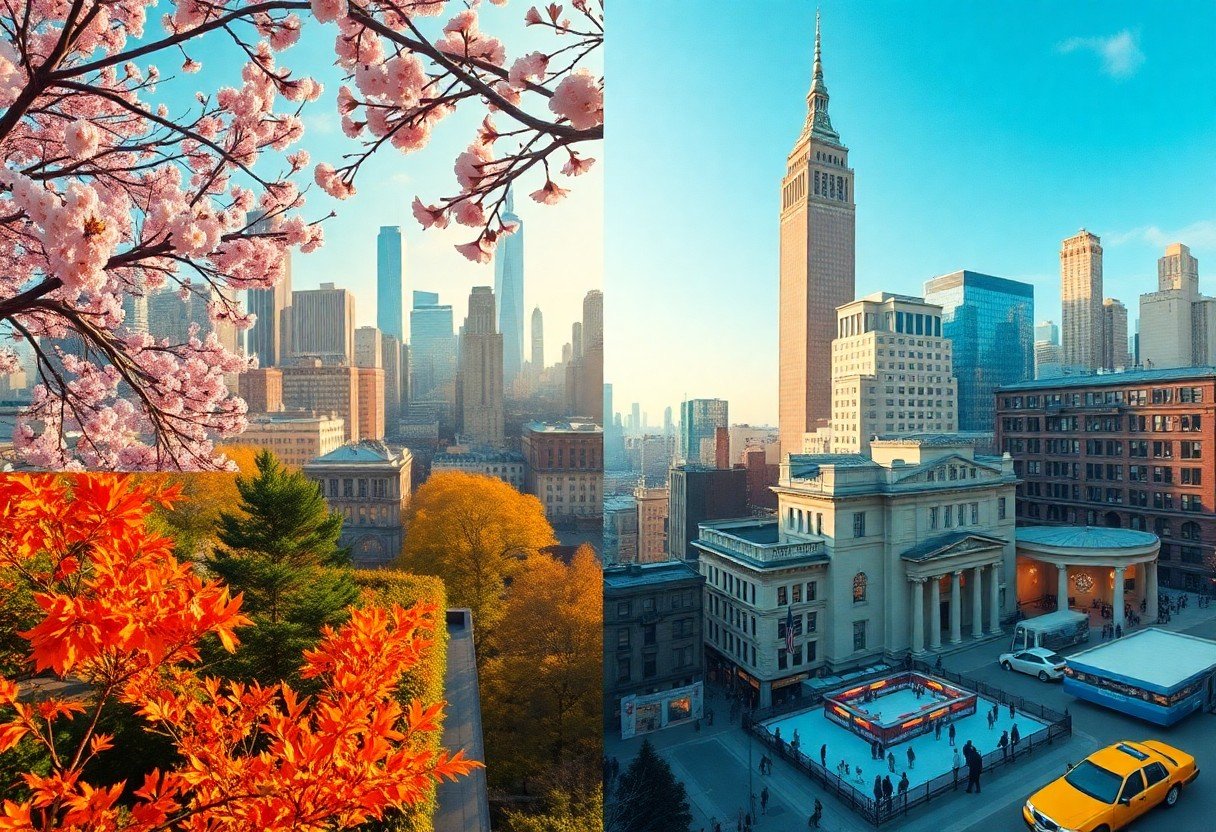
Just as someone who studies New York travel patterns, I guide you through the seasons so you can choose the best time to visit based on weather, events, crowd levels and budget; I explain why spring blooms, fall foliage, summer festivals and winter holidays each offer distinct experiences, and give practical tips so your trip aligns with your priorities and expectations.
Seasonal Overview
Spring in New York
I watch the city wake up as temperatures climb into the 45-65°F (7-18°C) range, with cherry blossoms peaking at Brooklyn Botanic Garden in late April and the Orchid Show at the New York Botanical Garden drawing crowds in March-April. You can catch outdoor dining and rooftop bars reopening, and I recommend planning museum afternoons between brisk morning strolls through Prospect or Central Park.
Summer Highlights
Summers push highs into the 80-95°F (27-35°C) range with sticky humidity; I head to Coney Island or the Rockaways for the beach and hit free events like Shakespeare in the Park or SummerStage in June-August. You’ll also find Pride in June and the Macy’s Fourth of July fireworks over the East River.
When I plan summer days I schedule mornings for walking and evenings for rooftop bars or waterfront concerts, since subway cars can be hot; you should carry water, use sunscreen, and book attractions early-Statue of Liberty and ferry tickets sell out on holiday weekends, and outdoor festivals often draw tens of thousands.
Autumn Attractions
Autumn slides in with crisp air and highs from the mid-60s in September to the 40s-50s by November; I time Central Park leaf-peaking for late October and attend the Village Halloween Parade for its spectacle. You’ll also notice marathon logistics ramping up-the NYC Marathon runs the first Sunday in November with about 50,000 runners.
I advise layering because mornings can be chilly and afternoons pleasantly warm, and I plan photo routes-The Mall, The Ramble, and Harlem Meer deliver vivid color; restaurant reservations are easier than in summer, yet popular theater and fall festivals still require advance booking.
Winter Wonderland
Winters average roughly 20-40°F (-6-4°C) with occasional snow; I prioritize indoor gems like MoMA or the Met on cold days but still carve out time for ice skating at Rockefeller Center or Wollman Rink and the Bryant Park Winter Village markets from late November through February.
When I travel in December I expect crowds for the Rockefeller tree lighting and the holiday shop pop-ups, and I dress in layers, insulated boots, and a warm coat-New Year’s Eve in Times Square draws massive crowds if you plan to watch in person, while January offers quieter museums and off-season hotel deals.
Weather Considerations
Temperature Patterns
I track seasonal contrasts closely: winters (Dec-Feb) typically have highs around 32-40°F and lows near 20-30°F, while summers (Jun-Aug) see highs of 80-85°F and lows of 65-72°F. Spring and fall vary widely-daytime 55-75°F-so I advise packing layers and a light jacket for chillier nights and warm afternoons.
Average Temperatures by Season
| Season | Avg High / Avg Low (°F) |
|---|---|
| Winter (Dec-Feb) | 32-40 / 20-30 |
| Spring (Mar-May) | 55-70 / 40-55 |
| Summer (Jun-Aug) | 80-85 / 65-72 |
| Fall (Sep-Nov) | 55-70 / 40-55 |
Precipitation Trends
I note New York averages about 49 inches of precipitation yearly and roughly 25 inches of snow, with rainfall fairly even month-to-month but peaks in late spring and early summer due to convective storms. You should expect sudden summer thunderstorms, nor’easter-driven heavy rain or snow from Oct-Mar, and occasional coastal flooding during strong fall storms like Hurricane Sandy (2012).
When I plan trips, I look at monthly averages: July often records ~4-5 inches of rain, while snowfall concentrates Dec-Mar and major nor’easters can drop a foot or more and disrupt transit. I recommend checking 10-day forecasts before travel, building padding into your schedule for subway delays, and bringing a compact umbrella plus waterproof shoes for wet spells.
Major Events and Festivals
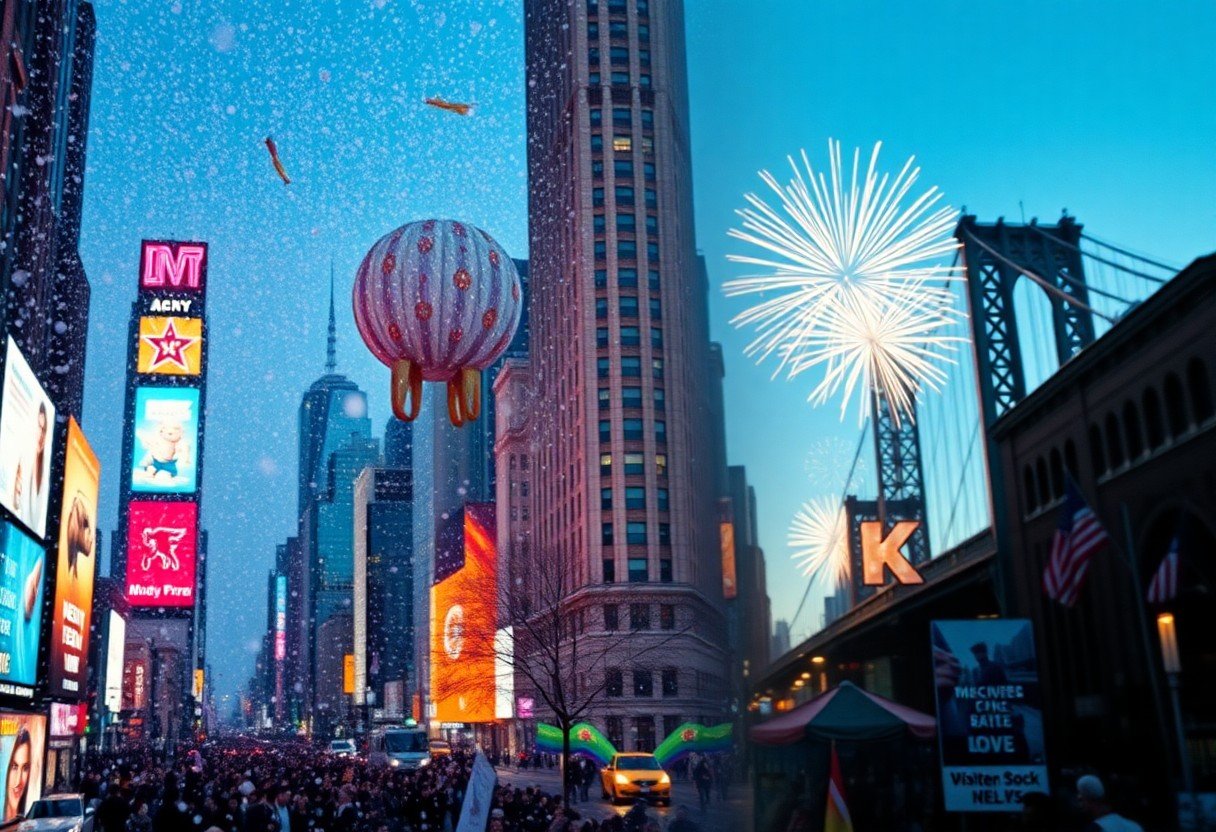
I track New York’s calendar closely because its headline events shape when I suggest you visit: the Macy’s Thanksgiving Day Parade and Times Square New Year’s Eve draw millions of spectators, the TCS New York City Marathon hosts roughly 50,000 runners every November, and Pride in June fills streets from Greenwich Village to Chelsea with vibrant programming. You’ll find seasonal street fairs, borough parades and large-scale citywide events that often determine hotel prices and transit crowds, so plan around dates if you want easier logistics.
Annual Events by Season
Winter centers on the Times Square ball drop and holiday window displays, while spring brings Tribeca Film Festival in June and Fleet Week in May; summer features Pride Month and outdoor concert series like SummerStage, and fall is packed with the NYC Marathon, Feast of San Gennaro in September and the Macy’s Thanksgiving Parade. I advise booking for June and November early, because festivals and races consistently push occupancy and ride-share rates up across Manhattan and Brooklyn.
Cultural and Artistic Festivals
I prioritize festivals like the Tribeca Film Festival (founded 2002), the New York Film Festival in late September-October, and major art fairs such as Frieze and the Armory Show, which showcase global galleries and contemporary artists. You’ll find hundreds of film screenings, gallery booths and curated talks across venues from Lower Manhattan to Brooklyn, and many events offer both ticketed premieres and free public programming that let you sample the cultural pulse without committing to full passes.
When I attend these festivals I watch for programming clusters-gallery openings in Chelsea and the Lower East Side often align with fairs, and film premieres concentrate at cineplexes and repertory houses. Buying festival passes early can save you from sold-out screenings; alternatively, look for free outdoor screenings, satellite exhibitions and community pop-ups in borough parks. You should also use subway routes that bypass Midtown on event days to avoid the biggest crowds and get to panels or late-night gallery shows faster.
Tourist Considerations
When planning a trip to New York, I weigh seasonal crowds, costs, and transit; summer (June-August) and mid-November-early January draw the biggest crowds and higher prices, while January-February are quieter. You should expect longer lines at Times Square, the Statue of Liberty and major museums, and I recommend booking timed-entry tickets and reserving restaurants in advance. Subway and bus remain fastest; expect frequent service and a $2.90 fare, with contactless OMNY available.
Peak vs. Off-Peak Travel
During peak months hotels and flights often rise 30-50% and attractions can sell out, so I advise booking 2-3 months ahead for summer and 3-4 months for holiday weeks. If you travel off-peak in January-February you’ll find lower rates, shorter lines, and better weekday museum access; I still suggest checking weather forecasts, since cold snaps and snow can affect outdoor plans.
Recommended Activities
I suggest balancing indoor and outdoor activities: take the free Staten Island Ferry, stroll Central Park, catch a rooftop bar in summer, and skate at Rockefeller Center or Bryant Park in winter (rates vary $20-$40). For theater, TKTS booths give same‑day Broadway discounts up to 50%, and I recommend afternoon museum visits to avoid evening crowds.
For museums and tours I buy tickets online-Met general admission, MoMA, and the American Museum of Natural History often have timed-entry and late hours; using the CityPASS can save roughly 40-45% on combined admission and skip lines at the Empire State Building and Top of the Rock. You should also check neighborhood events-Smorgasburg in Brooklyn runs weekends April-October, and I plan visits around those to mix food markets with sights.
Insider Tips for Visiting
I prioritize midweek museum visits and early mornings: MoMA lines thin before 10am and the Metropolitan is quieter 9-11am on weekdays. For restaurants I book 2-3 weeks ahead for popular spots, and I pick hotel neighborhoods (Chelsea for galleries, Williamsburg for nightlife) to match your daily plans. I use subway apps and Citi Bike for trips under 3 miles to avoid traffic; Perceiving the city by foot for a few hours each day reveals hidden brownstones and pop-up markets.
- I book shows and timed museum entries ahead; TKTS is best for same-day Broadway deals.
- I choose hotels on a subway line-7, A, and 2/3 give fast airport and Midtown links.
- I keep a MetroCard or use OMNY on your phone and download transit apps for alerts.
Best Times to Book
I aim to book flights 6-8 weeks ahead for domestic travel and 3-6 months for international; you’ll often find lower fares Tuesdays and Wednesdays. Hotels are often cheapest during shoulder seasons – mid-January to mid-March and late September to November – so I book then when I can. I reserve Broadway tickets and popular restaurants 4-8 weeks out for weekend visits.
Navigating Crowds
I steer clear of Times Square between 6-9pm on Friday-Saturday, and I travel the subway outside peak rush hours (avoid 7-9am and 4:30-6:30pm) to reduce delays. Early-morning visits help: I hit the Statue of Liberty ferry before 9am and the Empire State between 10-11am so you can cut queues.
I rely on timed-entry and early-access options: book MoMA or the Met with timed tickets and aim for the earliest slots so you get quieter galleries. I eat at 2-4pm to avoid restaurant lines, use Citymapper and MTA alerts to reroute around incidents, and seek side entrances (Metropolitan’s 84th Street) to save your time.
Final Words
Now I advise visiting New York in late spring and early fall for mild weather, manageable crowds, and outdoor events; winter brings holiday magic and sales, summer offers festivals and longer days but higher heat and humidity. I assess trade-offs in crowds, costs, and weather so you can pick the season that best fits your interests and your budget.
