

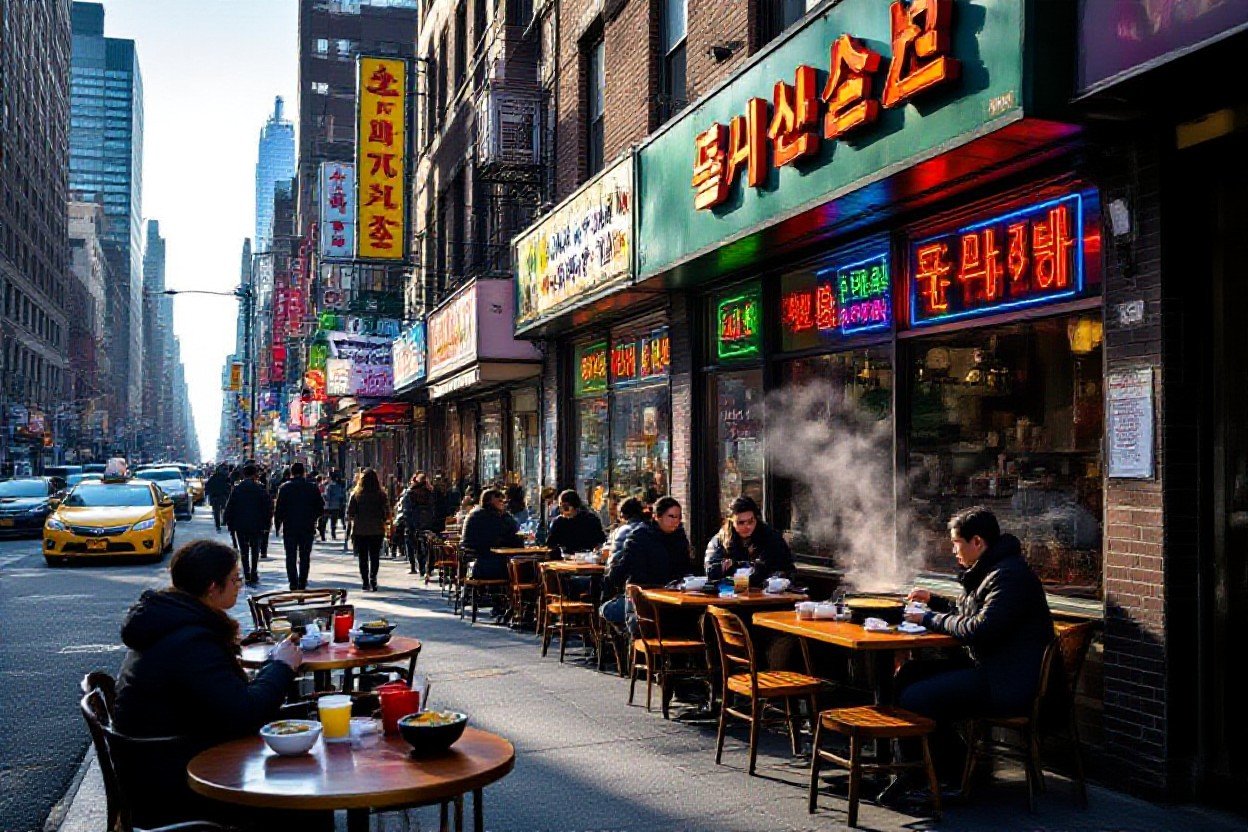
KoreaTown hums at lunch, immersing you in sizzling grills, neon storefronts, and communal tables where your camera captures gestures and steam, teaching you patience, composition, and empathy; these images become stories of personal growth and connection that guide your work for PapiJoe Travel and Photography, inspiring quieter observation and bolder framing as you travel and evolve.
Historical Background of Korea Town
The Rise of Korea Town in New York
After the 1965 Immigration and Nationality Act spurred Korean migration, a commercial cluster coalesced around West 32nd Street between Fifth Avenue and Broadway; by the 1980s a three-block Koreatown emerged packed with restaurants, bakeries, noraebang and grocery shops. I photograph the neon layers and changing storefronts that trace that community growth, and you can read decades of entrepreneurship in awnings and faded signs where mom-and-pop stalls sit beside newer K-beauty and tech shops.
Cultural Significance of the Area
Koreatown acts as both living room and stage for the Korean diaspora: churches, language classes and community centers sustain older generations, while K-pop, food tourism and nightlife draw younger visitors. I capture street-level rituals-kimchi jars in shop windows, late-night barbecue tables, karaoke queues-so you can see how food and sound stitch identity together, offering images that map migration, resilience and changing tastes.
On West 32nd Street you find concrete examples of that cultural layering: longtime restaurants like late-night barbecue spots and tofu houses share blocks with bakeries, PC bangs and karaoke rooms, while storefront signs in Hangul stand alongside English menus. I shoot both the busy evenings-steam rising from soondubu jjigae bowls-and quiet mornings when owners sweep sidewalks; you learn to frame both spectacle and small gestures. Those scenes taught me to look for continuity in details: a church bulletin board, a handwritten flyer for a Lunar New Year event, a storefront photographer’s portrait-each becomes a visual clue that helps you understand how a neighborhood holds memory and reinvention at once.

Popular Lunch Spots
On West 32nd between Fifth Avenue and Broadway you’ll find around 30 restaurants and karaoke rooms; you can choose Jongro BBQ for charcoal-grilled ribs, BCD Tofu House for bubbling soondubu, or Kunjip for hearty galbi tang. As you move between tables you’ll catch the rhythm of banchan refills and spicy aromas; I map shots of steam and hands passing chopsticks to tell those lunchroom stories.
Traditional Korean Cuisine
At classic spots you often get 8-10 banchan plates-kimchi, kongnamul, pickled radish-before a main like bibimbap or galbi. You should order a set lunch (many run $12-18) to sample textures: sizzling stone bowls, lacquered short ribs, and stew spoons you can shoot in close-up to capture steam and color. I use tight frames to show the communal nature of these meals and the way light falls across shared plates.
Contemporary Fusion Options
You’ll find inventive hybrids-kimchi tacos, bulgogi sliders, and gochujang-glazed wings-often on lunch menus under $20. Chefs blend Korean staples with Mexican, American, and Japanese techniques, producing bold contrasts that photograph beautifully: bright red glazes, sesame scatter, layered textures. I follow those plates because your images can show how tradition flexes into new expressions and tell a cross-cultural story in a single frame.
When you photograph fusion dishes, prioritize color and motion: try 1/125-1/250s to freeze sauce drips, use f/2.8-f/5.6 for shallow depth, and start around ISO 400-800 indoors. Carry a 35mm or 50mm for intimate angles and shoot at roughly 45 degrees to include both plate and the hands that serve it; I nudge saturation +10-15 and clarity in post to make glazes pop while keeping skin tones natural so your storytelling stays immediate.
Must-Try Dishes
In K-town you should prioritize bold, photogenic plates: bibimbap’s layered colors, sizzling Korean barbecue cuts like bulgogi and galbi, spicy tteokbokki, and a steaming bowl of kimchi jjigae. Expect vibrant contrasts-5-7 vegetable garnishes, glistening marinades-and plan shots around steam and movement. Try a 10-second sequence to capture the moment the yolk breaks across rice and the sauce folds into grains.
Bibimbap and Its Variations
You’ll find Jeonju-style bibimbap with marinated beef, sesame oil, and gochujang, plus dolsot bibimbap served in a hot stone bowl that crisps rice into nurungji. Typically 5-7 seasoned vegetables, a fried egg, and chili paste provide contrast; vegetarian and seafood versions are common. For photography, shoot overhead to show color strata, then a close-up as you mix to capture steam, texture, and the glossy yolk.
Korean Barbecue Experience
You can expect tabletop grilling of samgyeopsal (pork belly), marinated bulgogi, and galbi served with 6-12 banchan; thin slices cook in 1-2 minutes per side, so timing matters. Many K-town spots charge $25-45 per person for à la carte, with all-you-can-eat options higher. Photograph the sizzle from an angle to catch smoke trails and char patterns while you wait to wrap a bite in lettuce for color contrast.
You should also watch service rituals: servers often grill for you, cutting meat with shears and arranging ssam platters, and communal pacing is part of the experience. Pair with soju or beer and include hands, tongs, and small banchan bowls in frame to show scale; capture the sequence from raw marinated strip, mid-sizzle, to plated wrap to tell the full story of a shared meal.
Exploring the Ambiance
I wander West 32nd Street between noon and 2 pm, when steam from kimchi jjigae meets neon reflections on wet pavement, and you can feel the midday pulse shift underfoot; I frame portraits where warm brass lamps cut into cool window glass, capturing how light sculpts faces and signage alike, turning ordinary lunch lines into layered compositions that show both the neighborhood’s history and its present energy.
Traditional vs. Modern Decor
You’ll spot hanji lanterns, wooden lattices, and low tables beside exposed brick, Edison bulbs, and concrete counters; I lean on angles that highlight that contrast, shooting textures-the grain of reclaimed wood against sleek tile-so your eye tracks the story of adaptation, where a 100-year-old motif can sit beside a minimalist café counter without losing either’s character.
The Role of Music and Art
When K-pop playlists or trot ballads spill from noraebang doors and vinyl spins in small cafés, you feel the tempo change the scene; I compose with sound in mind, timing shutters to a chorus or a beat drop, and using murals and gallery posters as anchors so your photos carry both the song and the visual line of Koreatown’s narratives.
In practice, that means you and I work with rhythm: during a fast K-pop pulse I’ll choose 1/125-1/250s to freeze motion, while slower trot invites 1/30-1/60s for motion blur that suggests movement; I use a 35mm for candid context and a 50mm for intimate portraits, adjusting white balance for neon magentas and warm lantern amber, and you’ll notice how murals-bold Hangul typography or kimchi jar motifs-become recurring graphic elements that tie a series of images into a cohesive story about place and memory.
Tips for Dining in Korea Town
- Reserve ahead for popular spots like Jongro BBQ, especially for groups of 4+ on weekend nights.
- Bring a mix of cash and card; small mom-and-pop places often prefer cash for quick service.
- Order family-style: expect to share 6-12 banchan (small plates) and plan 2 mains per 3-4 people.
- Tell the server your spice preference-many stews and kimchi dishes offer mild to fiery options.
- Ask before photographing staff or other diners, and use natural light to capture food without intrusive flash.
The simple habits above keep your meal smooth, let you focus on frames and flavors, and deepen the stories you bring home.
Best Times to Visit
You’ll find 32nd Street between Broadway and Fifth Avenue busiest at lunch from about 12:00-14:00 and at dinner 19:00-22:00, while weekdays before 11:30 or mid-afternoon 14:30-16:00 are quieter for wandering with a camera. Weekends draw long lines-expect waits up to 45 minutes after 18:30-so arrive early or aim for late-afternoon meals. If you want both good light and fewer crowds, target a weekday 15:00 sit-down for lingering over shots and stories.
Etiquette and Dining Practices
You should wait for elders to begin eating, pour drinks for others (use both hands when offering a cup), and avoid sticking chopsticks vertically into rice. Share banchan respectfully-take small portions and refill as needed rather than piling one plate-and tip around 15-20% in sit-down restaurants. When grilling at the table, keep tongs and scissors in the center for communal use and be mindful of splatter when composing photos.
You’ll get better group orders by asking servers for ratios: for example, two barbecue platters plus a stew comfortably feeds four, while two people can share one BBQ set plus a soup. Handle banchan thoughtfully-kimchi and raw items are potent, so sample sparingly and avoid mixing chopsticks between communal dishes. When you photograph the meal, ask once, then move deliberately; a silent mode and close-up angles from the side preserve ambiance without interrupting service or the flow of conversation.
Final Words
The lunch crowds in Korea Town, New York show you how travel and photography intersect in everyday moments; your camera trains you to notice small rituals, your frames become stories of growth and empathy, and every shared meal teaches patience and new perspectives. As a travel photographer and storyteller, you learn to let images carry memory and meaning, turning neon steam and laughter into narratives that guide your craft and your journey.
