


Travel to New York and I’ll guide you to the city’s most photogenic corners, combining skyline panoramas, colorful street art, classic brownstones, and hidden rooftop vistas. Drawing on my experience scouting seasons and light, I’ll tell you when to shoot, which lenses to pack, and how to frame iconic landmarks to make your photos uniquely yours while avoiding tourist traps and maximizing your shooting time.
Iconic Landmarks
I map out shots around New York’s signature sights so you get varied perspectives: skyline silhouettes from rooftops, close-ups of architectural detail, and reflections in water. I use specific vantage points-Battery Park for harbor views, DUMBO for bridge symmetry, and One World Observatory for sweeping panoramas-and advise you to shoot at golden hour or blue hour when the light adds depth and reduces crowds.
Statue of Liberty
I time visits to the Statue of Liberty for early ferry runs or sunset cruises to capture the 305-foot monument with softer light. I book crown or pedestal tickets weeks in advance-access to the crown requires climbing 354 steps-and I often shoot from Battery Park, Liberty State Park, or the Staten Island Ferry (free) for wide compositions that include Ellis Island and the Manhattan skyline.
Central Park
I treat Central Park like a living studio across its 843 acres designed by Olmsted and Vaux: Bow Bridge and Bethesda Terrace for classic compositions, Sheep Meadow for sweeping meadow shots, and the Loeb Boathouse for rowboat reflections. I aim for early morning to avoid tourists and use seasonal cues-cherry blossoms in April or fall foliage in October-to give your images distinct moods.
I recommend specific spots: Belvedere Castle for a raised skyline view, Gapstow Bridge for Plaza Hotel reflections, and the Mall’s elm walk for leading lines. I run or bike the roughly 6-mile perimeter loop to scout light shifts during the day, and I compose with foreground elements-branches, benches, ponds-to frame the city beyond.
Trendy Neighborhoods
I often chase light and texture through Brooklyn and Manhattan’s trendiest pockets; in Williamsburg you’ll get mural-covered blocks and the East River waterfront with Domino Park, while SoHo delivers 19th-century cast-iron facades and cobblestone streets that sing in golden hour. I prioritize early mornings or blue hour for cleaner frames, and you can plan your shots around weekend events like Smorgasburg or gallery openings.
Williamsburg
In Williamsburg I gravitate to Bedford Avenue’s murals and the Domino Park waterfront for skyline compositions; the park opened in 2018 around the Domino Sugar site and gives you direct Manhattan views. I time rooftop shots from Westlight at the William Vale around sunset, and on Saturdays Smorgasburg brings 100+ vendors-great for candid street-food portraits and colorful close-ups.
SoHo
SoHo’s cast-iron facades-about 250 buildings in the Cast‑Iron Historic District-offer repeating patterns and dramatic shadows; I favor Prince and Greene Streets for storefront symmetry and often shoot between 8-10 a.m. to avoid crowds. You can pair cobblestone alleys with boutique interiors from brands like Hermès and independent galleries for contrasts in texture and scale.
The Cast‑Iron Historic District was landmarked in 1973, and those prefabricated iron facades-installed in the mid‑1800s-give SoHo its distinctive ornamentation; I leverage the tall arched windows and 12-18‑foot ceilings in converted lofts for interior portraiture, and you can recreate iconic compositions using junctions like Greene & Prince or the narrow Crosby Street alleys after rain for reflective cobblestones.
Unique Art Installations
I seek out installations that transform ordinary streets into photo-ready stages, from Socrates Sculpture Park to Governors Island pop-ups and rooftop light works in Brooklyn. You’ll find site-specific commissions, interactive pieces, and large-scale murals; I time visits for golden hour and check artist lists and exhibition dates so your shots capture both the work and its seasonal context.
The High Line
Stretching 1.45 miles above Manhattan’s West Side and opened in phases from 2009 to 2014, the High Line hosts a rotating public-art program that draws about 8 million visitors a year. I look for site-specific sculptures and ephemeral installations-often commissioned by Friends of the High Line-and you should aim for early mornings or weekday afternoons to frame the work against the Hudson or city skyline.
5Pointz
Once a mural mecca in Long Island City created by more than 100 artists, 5Pointz was whitewashed in November 2013 and demolished in 2014 to make way for development. I still study its archive images and follow former contributors-many continue painting in Queens-so you can trace styles and find surviving murals nearby or in artists’ portfolios.
The site’s legal aftermath is notable: a 2018 federal jury awarded artists $6.7 million under the Visual Artists Rights Act for the destruction of their work, setting a precedent for street art protection. I use that history to guide photo projects-document provenance, credit artists, and seek permissions when shooting private or active commissions that carry 5Pointz’s legacy.
Scenic Views
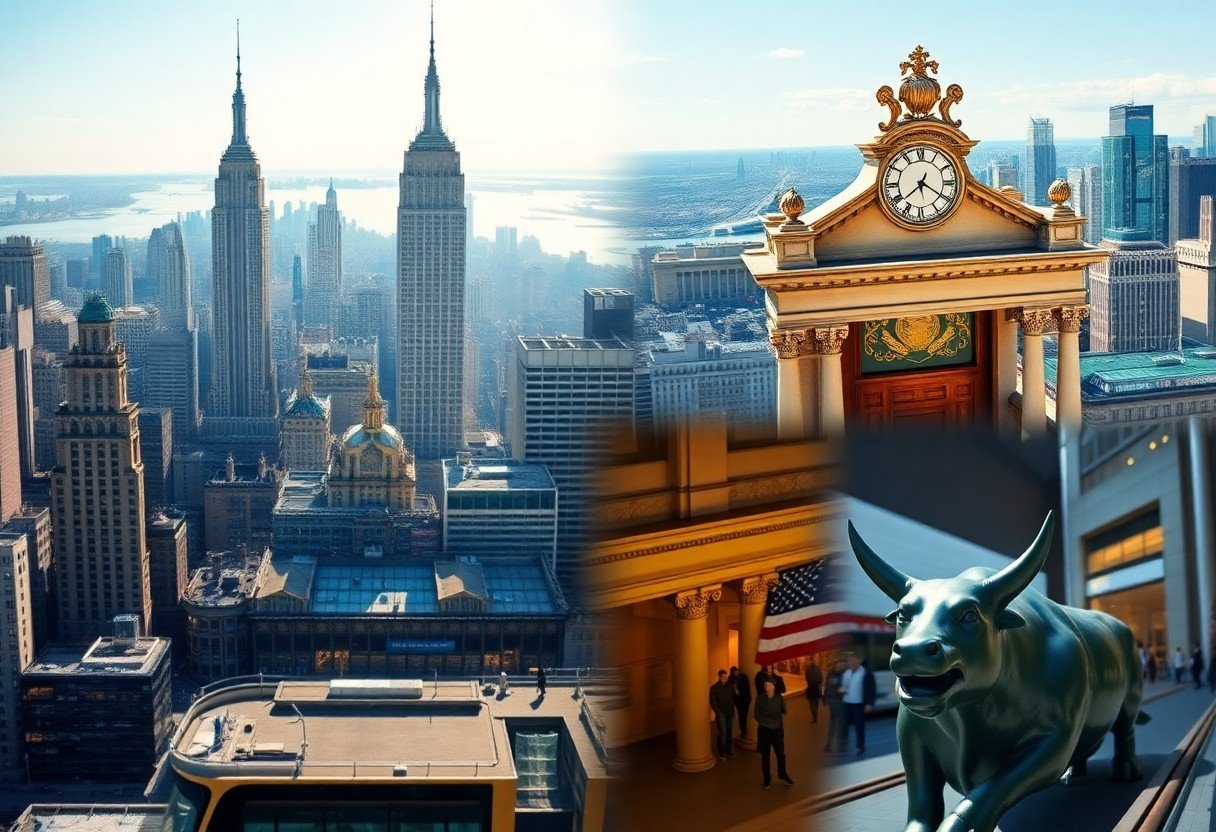
I prioritize skyline vantage points that show the city’s layers-from waterfront piers to rooftop decks-so you get both scale and detail in one frame. I usually aim to arrive 30-45 minutes before sunset to catch golden hour, then stay through blue hour for city lights; that routine reliably yields shots where Central Park, the Hudson, and iconic towers sit in a single composition. Specific spots later deliver those framed perspectives depending on the angle you want.
Top of the Rock
I value Top of the Rock for its three-level observation decks on the 67th, 69th and 70th floors, which let you frame the Empire State Building directly against Midtown. I buy timed-entry tickets in advance-weekends often sell out 1-2 weeks ahead-and shoot from the highest level for unobstructed 360-degree panoramas that include Central Park to the north and the river to the west.
Brooklyn Bridge
I walk the pedestrian promenade over the bridge for classic leading-line shots: the Gothic stone arches and web of steel cables draw the eye straight to Manhattan. I time visits for sunrise or just after sunset to avoid heavy foot traffic and capture warm light on the towers; the bridge’s main span is about 1,595 feet and opened on May 24, 1883, giving historical context to every frame.
I recommend starting on the Brooklyn side-DUMBO or the Brooklyn Heights Promenade-so you can shoot the bridge with the Manhattan skyline behind it, then walk into Manhattan for alternate angles. I use a wide-angle (16-35mm) for architecture and a 50mm for environmental portraits; settings like f/8-f/11 keep the structure sharp, and slower shutter speeds (1/2-2s) soften river reflections if you stabilize or time the quieter hours.
Hidden Gems
Among the lesser-known corners I chase are spots that reward patience: Green-Wood Cemetery’s 478 acres for sculptural portraits, the High Bridge (reopened 2015) for riverine skyline lines, and the Roosevelt Island Tram for 360° views you can grab in under five minutes. I point you to City Hall Station too-closed in 1945 but sometimes visible on Transit Museum tours-because 1-2 tucked-away sites per borough will change how you frame the city.
DUMBO
At Washington and Water Streets I line up the Manhattan Bridge-opened 1909-to frame the Empire State Building through its arch, using the cobblestone streets as foreground texture. I use Jane’s Carousel (1922, restored 2011) for golden-hour reflections and motion shots; try a 1/125s shutter to freeze riders or 1/30s for gentle blur. You can shoot both sunrise and blue hour here and get distinctly different palettes within 90 minutes.
The Whispering Gallery
Beneath Grand Central Terminal’s Oyster Bar (the terminal opened 1913) I often use the tiled arched walkway called the Whispering Gallery to capture intimate sound-and-light portraits: stand at one corner while your subject whispers into the opposite curve and you get natural acoustic drama plus ambient tungsten tones. I frame the curved tiles and repetition to convey the concourse’s geometry while keeping passersby as scale.
For shooting the gallery I recommend arriving early (before 9:00 AM) or late evening to avoid peak crowds, using a fast prime at f/1.8-2.8 with ISO 800-1600 and shutter 1/60-1/125s to balance motion and noise. I avoid flash to preserve warm tiles, focus on the diagonal of the arch for the whisper effect, and ask your subject to whisper directly into the curve so your audio-and-visual story syncs in a single frame.
Seasonal Spots
Winter Wonderland at Bryant Park
I shoot Bryant Park’s Winter Village during golden hour, arriving about 90 minutes before sunset to capture the rink’s free-admission ice under warm string lights; skate rentals are available if you want action shots. I use a 35mm for environmental scenes and a 50mm at f/1.8 for bokeh from holiday market stalls. You can frame the New York Public Library’s facade in the background for classic NYC context.
Cherry Blossom Festival in Brooklyn
At the Brooklyn Botanic Garden I time visits for the Sakura Matsuri weekend, usually in April, arriving before 10:00 AM to avoid crowds and shoot the Cherry Esplanade with soft light. I favor an 85mm for tight blossom portraits and a 24-70mm for wider compositions that include adjacent ponds; you can find tea ceremonies and live performances on the schedule, so check the garden’s calendar and book tickets early.
On peak bloom days I map three spots: the Cherry Esplanade, the Japanese Hill-and-Pond Garden, and the bonsai display, spending 60-90 minutes rotating lenses and shooting at f/5.6 to keep branches sharp while isolating backgrounds. If you want crowd-free frames, I recommend weekday mornings or a 200mm to compress people into soft background shapes, and I always pack spare batteries for extended shooting sessions.
Final Words
The city’s light, geometry, and neighborhoods offer endless Instagram-worthy frames; I’ve curated spots across boroughs so you can plan efficient routes, use your best angles, and shoot at optimal times. I guide you to compositions that balance iconic landmarks with hidden details, advise on respectful behavior around subjects, and help you tell a visual story that stands out on your feed.
