

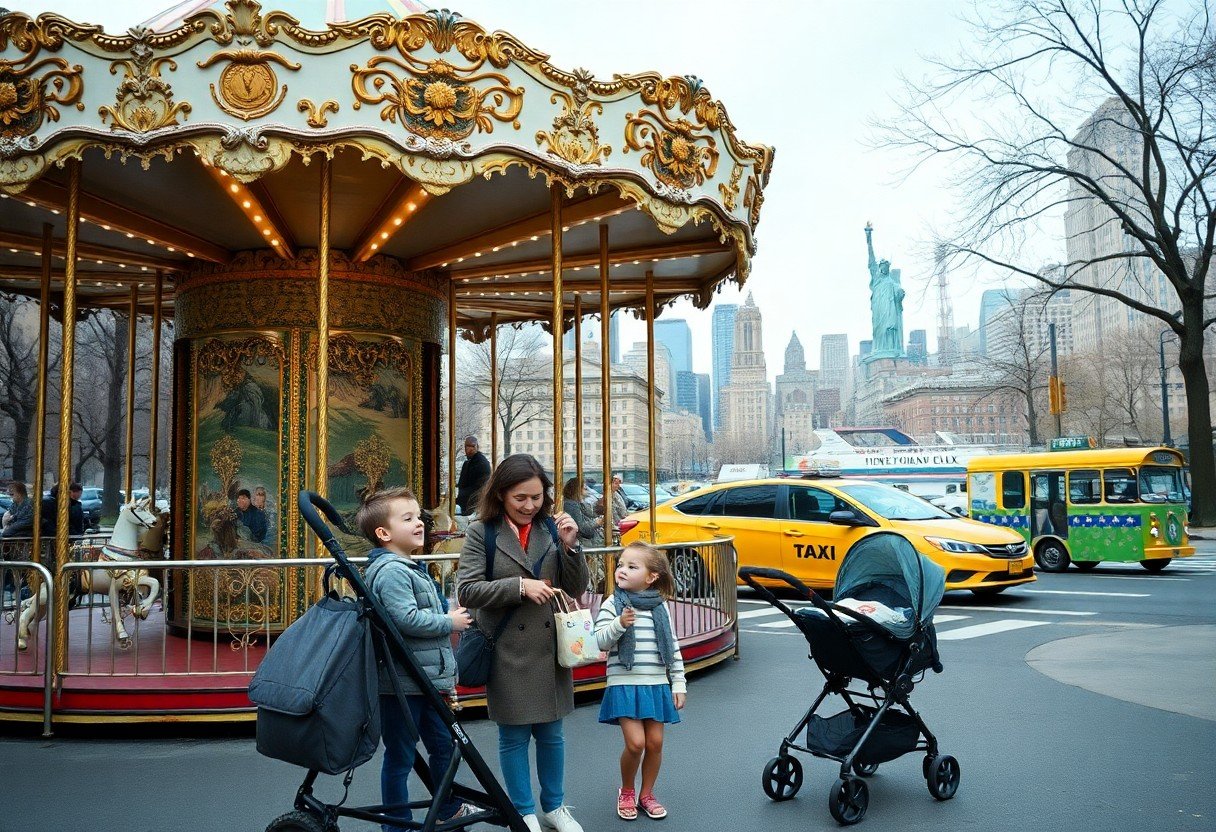
There’s no shortage of family-friendly adventures in New York, and I draw on local experience to help you plan outings that delight kids and parents alike; I highlight hands-on museums, spacious parks, interactive theaters, ferry rides to the Statue of Liberty, and easy transit routes so you and your family can maximize fun while minimizing hassle.

Best Parks and Playgrounds
I point families to NYC’s big green anchors and quiet neighborhood spots alike: Central Park’s 843 acres and Prospect Park’s 585 acres offer playgrounds, picnic spots, and seasonal attractions, while dozens of smaller parks and splash pads in every borough give you quick, shaded playtime close to your subway or stroller route.
Central Park
I bring kids to Central Park for specific draws: Heckscher Playground for climbing, the Tisch Children’s Zoo for up-close animals, and Conservatory Water for model sailboats. You can rent rowboats at the Loeb Boathouse, skate at Wollman Rink in winter, and stroll to Belvedere Castle-all within the park’s 843-acre layout that keeps families entertained for hours.
Prospect Park
I favor Prospect Park when we want more open meadow and quieter woodlands; its 585-acre design includes the 90-acre Long Meadow for frisbee and kite flying, the Prospect Park Zoo for toddler-friendly exhibits, and shaded trails that feel more rustic than Manhattan’s central green.
For planning, I suggest arriving by subway-many playgrounds and the zoo are a short walk from the 2/3 or B/Q lines-and checking seasonal program schedules at the Audubon Center and Lefferts Historic House. You can spread a picnic on Long Meadow, use stroller-friendly loops for a brisk walk, and aim for weekday mornings if you want smaller crowds and easier café or restroom access.
Museums for Kids
I pick museums that let your kids touch, experiment and get loud without scowls; I recommend blocking 2-4 hours per stop and booking timed-entry tickets in advance. For big-sight science I head to the American Museum of Natural History (founded 1869, over 33 million specimens) and for hands-on play I choose the Children’s Museum of Manhattan (moved into a larger space in 2018). You can combine a morning at AMNH with an afternoon at nearby playgrounds or a riverside stroll.
American Museum of Natural History
At the American Museum of Natural History I head straight to the fossil halls-T. rex and Apatosaurus mounts command attention-and the Milstein Hall of Ocean Life with its 94-foot blue whale model. The Rose Center/Hayden Planetarium runs family-friendly shows daily, and the Discovery Room offers hands-on activities for ages 3-12. I advise allowing 2-4 hours, using the map to prioritize exhibits, and checking the daily schedule for kid-focused tours and demonstrations.
Children’s Museum of Manhattan
The Children’s Museum of Manhattan centers on interactive galleries for kids 0-10, with hands-on art studios, sensory-friendly spaces and rotating cultural exhibits. I count its storytimes and short workshops as ideal for preschoolers, and themed exhibits change several times a year to keep repeat visits fresh. Timed tickets and stroller parking make logistics straightforward for families juggling naps and snacks.
I recommend arriving in the morning for the Children’s Museum of Manhattan because most families spend 1.5-2 hours exploring studios and pop-up labs; the museum sits on West 83rd between Broadway and Amsterdam, a short walk from Central Park. I also check the calendar for Saturday family workshops, bilingual programs in English and Spanish, and sensory-friendly hours; memberships typically include free admission and discounts on drop-in classes if you plan repeat visits.
Educational Experiences
New York Hall of Science
In Queens, the New York Hall of Science features over 450 hands-on exhibits, a Rocket Park with a restored 1950s Explorer rocket, and maker labs where I let my kids build circuits or program simple robots. You can enroll them in weekend STEM workshops or seasonal camps; the outdoor science playground and interactive demonstrations suit roughly ages 2-15 and make complex concepts tangible in under an hour-long demo sessions.
Intrepid Sea, Air & Space Museum
Moored at Pier 86, the Intrepid sits aboard USS Intrepid (CV-11), an Essex-class carrier commissioned in 1943, displaying more than 30 aircraft along with the Space Shuttle Enterprise and a Concorde. I watch my kids explore cockpits, stand on the flight deck, and use interactive kiosks that explain aircraft roles and carrier history in accessible, hands-on ways.
For deeper engagement, I schedule 2-3 hours to include the USS Growler submarine tour and the flight simulators; docent-led family tours and scavenger hunts help younger children connect artifacts to stories. The museum offers curriculum-aligned school programs and STEM workshops for grades K-12, and I always buy timed-entry tickets online to avoid lines and secure specific exhibit experiences like cockpit access or special temporary exhibits.
Family-Friendly Attractions
I pick attractions that mix hands-on learning and open play so your kids stay engaged: the American Museum of Natural History lets you walk past 26 dinosaur halls, Brooklyn Bridge Park offers splash pads and lawns for picnics, and interactive spots like the Children’s Museum of Manhattan have rotating exhibits geared to ages 2-10. I also map out transit-friendly routes so you spend more time exploring and less time in lines or cabs.
Times Square
I suggest visiting Times Square in the late morning when crowds are lighter; the pedestrian plazas and giant LED billboards still dazzle without evening crush. You can score same-day Broadway seats at TKTS-often up to 50% off-grab kid-friendly treats at M&M’s or the Disney Store, and plan a short matinee so your children see a show without late-night fatigue.
Statue of Liberty
I book Statue Cruises from Battery Park in advance because ferries run every 15-20 minutes in peak season and tickets often sell out; standard tickets include Liberty Island and Ellis Island. You should know that pedestal and crown access require separate reservations and limited-capacity entry, and security screening is the same as at an airport, so pack light for smoother boarding.
I also point out that the statue stands 305 feet (93 m) from ground to torch and reaching the crown involves climbing 162 narrow steps from the top of the pedestal, so I advise older kids and fit parents for that option. An elevator serves the pedestal and the Pedestal Museum explains construction details, while audio tours and the National Park Service’s Junior Ranger materials give your children structured, age-appropriate context for the visit.
Seasonal Activities
Across seasons I lean into what’s on: November-March brings ice rinks like Bryant Park Winter Village (free entry), Wollman Rink in Central Park and the Rockefeller Center icon; June-September fills with Celebrate Brooklyn!, SummerStage, Shakespeare in the Park and Gov Ball on Randall’s Island. I check calendars and ticket lotteries so your family can target kid-friendly workshops, matinee performances and manageable travel times around naps and stroller routes.
Ice Skating in Winter
I often take the kids to Bryant Park Winter Village for free admission and rental options, book Wollman Rink for lessons and skyline views, and visit Rockefeller Center for the photo op despite longer lines. Ice seasons run roughly November through March; I recommend reserving rentals or lessons online, arriving early for smaller crowds, and bringing thin, warm layers so your kids stay comfortable on and off the ice.
Outdoor Festivals in Summer
I plan festival days between June and September: Celebrate Brooklyn! at Prospect Park offers free and ticketed family programming, SummerStage spreads concerts across borough parks, Shakespeare in the Park at the Delacorte relies on lotteries for free seats, and Governors Ball on Randall’s Island suits older kids with multiple stages. You’ll find kids’ stages, workshops and vendor food; I suggest checking schedules and age-appropriate lineups before you go.
I also sort logistics: arrive 45-90 minutes before headline sets for family seating, use subway/ferry or event shuttles to avoid parking, pack sunscreen, refillable water and ear protection for little ones, and confirm stroller and bag policies. I sign up for digital lotteries or buy advance wristbands for kids’ areas when available so your day includes short activities, bathroom breaks and stress-free exits.
Dining with Kids
Themed Restaurants
I bring my kids to themed spots for a meal and a show: Ellen’s Stardust Diner near Times Square features singing servers and Broadway tunes, Serendipity 3 on the Upper East Side is known for oversized frozen hot chocolate perfect for sharing, and Dave & Buster’s pairs an arcade with a kid-friendly menu so you can budget play credits alongside dinner.
Kid-Friendly Cafes
I seek cafes with high chairs, changing tables, and a relaxed vibe; Alice’s Tea Cup (multiple locations) offers child-sized scones and tea sets, while many Park Slope and Williamsburg spots have play corners and simple plates-think grilled cheese or fruit cups often priced under $8-so you can sip coffee while your child plays.
When I choose a cafe I check weekend policies and timing, aiming for mid-morning to avoid crowds and requesting a table near the play area; I order combo plates (usually $5-9) and ask staff about allergens or high chairs, and note that some play cafes add a $5-10 weekend access fee, so I factor that into my plan.
Final Words
The vibrant mix of museums, parks, ferry rides and family-friendly shows makes New York ideal for families; I have guided many parents through kid-focused itineraries and can help you prioritize activities so your trip balances education and fun. Plan a mix of indoor and outdoor options, use transit smartly, and set realistic pacing for younger children to make the most of your visit while keeping stress low.
