


Most travelers ask me where to stay in New York, so I’ve mapped neighborhoods to fit your priorities: budget-friendly Brooklyn lofts, Midtown convenience for first-timers, SoHo and West Village for style and dining, Upper West Side for families, and Long Island City for value with skyline views; I’ll explain pros and cons, transit access, and what each area feels like so you can pick the best base for your trip.
Manhattan
I break Manhattan down by what you want within walking distance: museums and parks near the Upper East/West, theater and Midtown energy around Times Square, and food and nightlife in the Village and LES. I advise matching your days-museum-heavy, business, or nightlife-to a neighborhood; that way your transit time stays under 20-30 minutes for most plans.
Times Square: The Heart of the City
Times Square draws about 330,000 pedestrians a day and hosts the New Year’s Eve ball drop at One Times Square since 1907, plus the Broadway district’s 41 theaters nearby. I book here when I want 24/7 energy, flagship stores, and direct access to multiple subway lines, but you should expect noise and bright lights late into the night.
Upper West Side: Family-Friendly Vibes
The Upper West Side sits between Central Park and Riverside Park, with the American Museum of Natural History at Central Park West & 79th and Lincoln Center on 65th; I favor it for families because playgrounds, quieter streets, and easy 1/2/3 and B/C subway access make logistics simple for kids and strollers.
I often stay near 72nd-86th Streets-Hotel Beacon on Broadway at 75th is a solid family pick with suites and kitchenettes-so your morning can start with Zabar’s on 80th for quick breakfast, then a short walk to Heckscher Playground or a children’s program at the museum.
Lower East Side: Trendy and Eclectic
The Lower East Side mixes century-old institutions like Katz’s Delicatessen (est. 1888) with contemporary bars, galleries, and street art; I choose it when I want late-night food and a compact bar crawl. You’ll find Essex Market’s new 2019 location at 88 Essex St and a dense cluster of independent shops within a few blocks.
When I explore the LES I base myself near Orchard or Ludlow so you can walk from Katz’s on Houston to Tenement Museum tours on Orchard, catch pop-up gallery openings, and hop the J/M/Z at Delancey/Essex for quick access to Brooklyn or Midtown.
Brooklyn
I treat Brooklyn as its own city-about 2.7 million people, dozens of distinct enclaves and a mix of parks, waterfronts and brownstones. I send visitors to transit hubs like Atlantic Terminal for fast Manhattan access (10-20 minutes), while you can spend entire days hopping from food markets to galleries. Expect varied vibes block by block: industrial lofts and tech offices meet century-old stoops and family-friendly streets, so pick neighborhoods based on nightlife, kids or scenic views.
Williamsburg: Hipster Haven
I send anyone wanting buzzy nightlife and indie culture to Bedford Avenue on the L train; you’ll find rooftop bars, vinyl shops and the Music Hall of Williamsburg. Weekends bring Smorgasburg at East River State Park with 100+ food vendors in season, and Domino Park’s skyline views are perfect for sunset photos. If you like craft coffee, street murals and small-batch boutiques, Williamsburg delivers concentrated energy within a compact walkable grid.
DUMBO: Artsy and Scenic
I recommend DUMBO for iconic views-the Manhattan Bridge frames cobblestone streets and the waterfront at Brooklyn Bridge Park. York Street on the F train drops you steps from Jane’s Carousel, galleries and boutique hotels. Photographers flock here at sunrise for skyline shots, while restaurants along the river offer strong brunch and dinner options with a view.
I also point out that DUMBO’s former warehouses now house studios, theaters like St. Ann’s Warehouse and design firms, creating a tight creative community. You can walk the Brooklyn Bridge to Manhattan in about 20 minutes, or take the NYC Ferry for a 10-15 minute hop to East River piers; either way, the neighborhood packs culture, waterfront access and highly photogenic streets into a small footprint.
Park Slope: Green and Charming
I steer families and park lovers to Park Slope for its tree-lined brownstones and immediate access to Prospect Park. You’ll find family-oriented cafes, P.S. 321 (a highly regarded elementary), and lively 5th and 7th Avenue shopping. Transit links put you into Manhattan in roughly 10-20 minutes, while the neighborhood itself rewards slow mornings at bakeries and evenings at neighborhood bars and intimate restaurants.
I add that Park Slope sits adjacent to major institutions-the Brooklyn Museum and Brooklyn Botanic Garden are a 5-10 minute walk-so cultural outings are easy to combine with park time. Weekend highlights include the Grand Army Plaza farmers’ market, multiple children’s playgrounds and dog runs, plus a steady rotation of local events that keep the neighborhood feeling active without the tourist crush.
Queens
I often steer travelers to Queens when they want authentic food and lower lodging costs; LaGuardia and JFK sit in the borough, Flushing Meadows-Corona Park hosts the US Open at the USTA Billie Jean King National Tennis Center, and neighborhoods like Flushing, Astoria and Long Island City offer distinct vibes. You’ll find everything from ethnic eateries to waterfront parks, and many spots reach Midtown in about 15-30 minutes by subway or a short ferry ride.
Astoria: Cultural Melting Pot
I pick Astoria when I want both great restaurants and creative energy: the Museum of the Moving Image and Kaufman Astoria Studios anchor a film-friendly scene, Ditmars and Steinway host dozens of Greek tavernas and Middle Eastern bakeries, and Astoria Park gives wide East River views plus a large public pool. You can reach Midtown in roughly 20-25 minutes by subway, so Astoria works well for nights out without Manhattan prices.
Long Island City: Urban Chic
I often choose Long Island City for skyline views and contemporary art-Gantry Plaza State Park frames Midtown across the river and MoMA PS1 programs experimental exhibitions. New high-rises and converted warehouses provide hotel choices and short walks to Court Square and Queensboro Plaza, while the NYC Ferry and multiple subway lines put Manhattan about 10-20 minutes away, making LIC a smart base for modern stays.
I recommend staying near Court Square or Hunterspoint for the best transit: E, M and G trains plus nearby 7 and LIRR stops get you into Midtown in roughly 10 minutes. I like hotels along Vernon Boulevard for skyline-facing rooms, and I suggest visiting MoMA PS1 for contemporary shows and Gantry Plaza State Park at sunset for photos. If you need quick airport access, LaGuardia is typically 15-25 minutes by car from LIC.
The Bronx
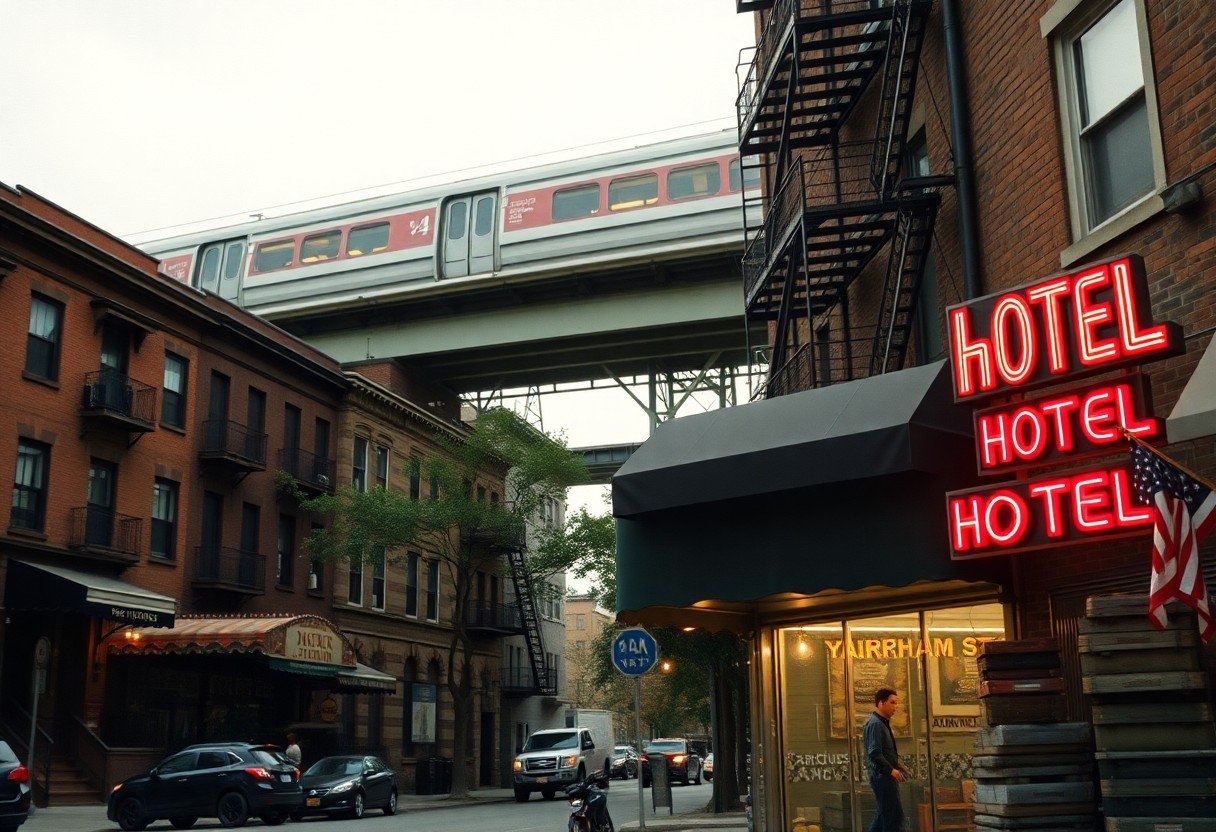
I favor the Bronx when I want a mix of big-city attractions and neighborhood life: Yankee Stadium (about 47,000 seats) for games, the Bronx Zoo (≈265 acres) and the New York Botanical Garden (≈250 acres) for daytime outings. I suggest staying near Fordham for easy Metro-North access if you’re coming from Westchester, or near 161st Street to be within a short subway ride of the stadium and museum corridor. You’ll find lower nightly rates than Manhattan and authentic restaurants on nearly every block.
Belmont: The Real Little Italy
I head to Belmont for Arthur Avenue’s market stalls, family-run bakeries and old-school trattorias where you can get fresh mozzarella and handmade pasta; the Arthur Avenue Retail Market is a local landmark. You’ll find affordable meals under $25 and butcher shops that have served families for generations. I recommend a walking food tour-three or four stops will give you a full sense of the neighborhood’s culinary history.
Riverdale: Suburban Serenity
I pick Riverdale when I want leafy streets and quieter nights-it’s a hilly, residential pocket with homes, co-ops and boutique B&Bs rather than big hotels. You’ll benefit from top private schools nearby (Riverdale Country School, Horace Mann) and easy commuting via the Metro-North Hudson Line, which gets you to Midtown in roughly 25-30 minutes. Expect higher nightly rates but a much calmer stay.
I also recommend Wave Hill (a 28-acre public garden) for riverside views and Van Cortlandt Park (about 1,146 acres) for long trails and golf; both are within a few minutes of Riverdale’s center. I find dining here more neighborhood-driven-cafés and delis rather than tourist traps-and limited hotel inventory means booking early or choosing an apartment if your stay is longer than a couple nights.
Staten Island
I treat Staten Island as NYC’s quieter option: about 58 square miles of neighborhoods, parks and shoreline where I can breathe. I use the free Staten Island Ferry (roughly 25 minutes) to reach Manhattan, and you’ll find budget hotels near St. George, historic bed‑and‑breakfasts in Tottenville, and big green spaces like the Greenbelt for hiking. If you want a relaxed base with waterfront views and easy Manhattan access, this borough gives you suburban calm without sacrificing city connections.
St. George: Gateway to the City
I stay in St. George when I want immediate ferry access-ferries run 24/7 and the ride is about 25 minutes-plus the Staten Island Railway links you to the rest of the island. You’ll find walkable dining along the Esplanade, several budget- and midrange hotels within five minutes of the terminal, and quick transit options that make commuting into Manhattan straightforward while keeping evenings notably quieter than Midtown.
Snug Harbor: A Cultural Retreat
I recommend Snug Harbor for a concentrated dose of culture: the 83‑acre Snug Harbor Cultural Center & Botanical Garden mixes restored 19th‑century buildings with the Chinese Scholar’s Garden and contemporary art spaces, so you can spend a serene morning among gardens and galleries. If you prefer museum- and park‑centric days, you’ll enjoy lodging in nearby neighborhoods and a low‑traffic pace compared with Manhattan.
I typically allot 2-3 hours at Snug Harbor: I wander the botanical gardens, step into the Chinese Scholar’s Garden-designed to evoke traditional scholar landscapes-and visit the Newhouse Center for Contemporary Art. Practical tip: I get there after the ferry, then take a short 10-15 minute drive or a 20-25 minute walk from St. George; seasonal concerts and weekend workshops often run in summer, so I check the calendar and aim for an early arrival to avoid crowds and get the best light for photos.
Choosing the Right Neighborhood for Your Trip
Narrowing the options
Decide by travel style: if you want museums and Broadway I pick Midtown or the Upper West Side-many attractions are a 10-25 minute subway ride and hotels range widely from about $150-350 per night; for nightlife and indie scenes I favor the East Village or Williamsburg, which is 10-20 minutes to Manhattan on the L and often cheaper; for business trips Long Island City gives a 7‑minute 7 train commute to Midtown and saved me roughly 30% on lodging, so check lines, walk times (5-20 minutes) and rates before booking.
To wrap up
Now I recommend choosing a neighborhood that matches your priorities: Manhattan for proximity, Brooklyn for local flavor, Queens for budget and diversity, the Upper West Side for families, and the Lower East Side for nightlife. I’ll help you weigh transit, safety, and vibe so you can pick the right base for your trip and make the most of your time in New York.
